Attica Uprising, 1971
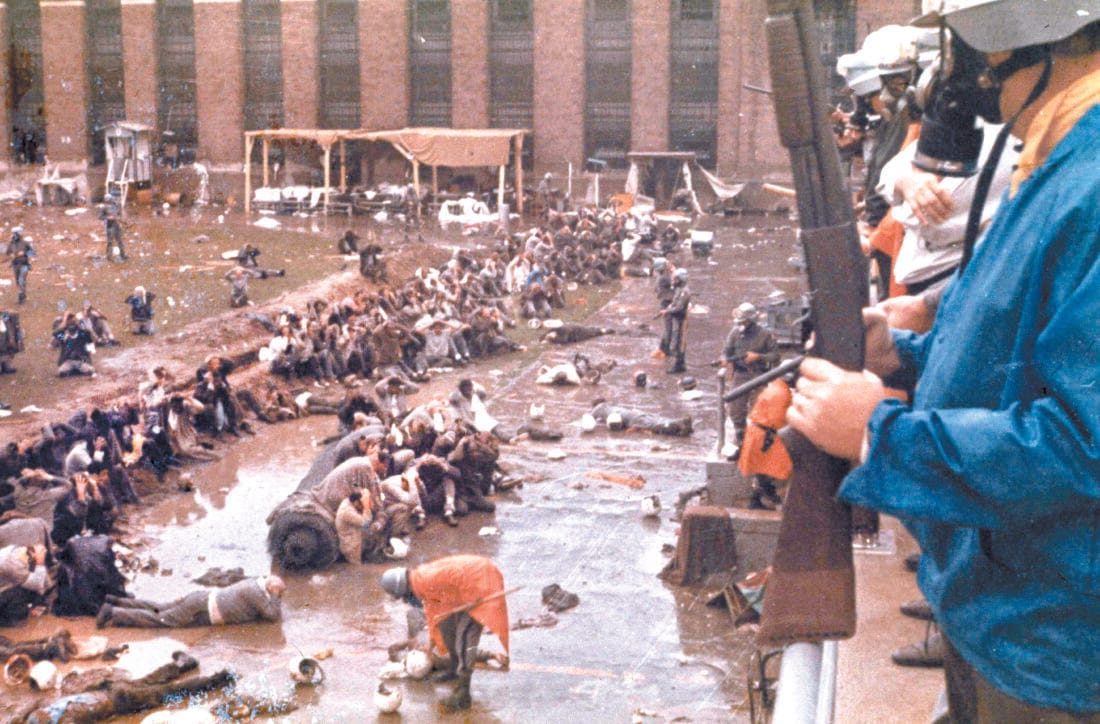
The word “Attica” got turned into a chant, a slogan, a meme... a punchline. The actual tragedy seems to have been largely forgotten. It’s been memory-holed as just another prison riot. It was not. It was a massacre. And America mostly shrugged, because the victims were men society had already written off as disposable. The very state that created the conditions that funneled them into prison pulled the trigger when they demanded dignity. There are photos of the atrocities and reprisals by the state I can’t even share here. Buckle up...
The Spark
On September 9, 1971, Attica exploded after years of cruelty. Built for 1,600, it held more than 2,200 men packed into cells like livestock. The food was literal garbage not fit for dogs, medical care was nearly nonexistent, and beatings and abuse were routine. Black and Latino prisoners made up the majority, guarded by an almost entirely white staff. Punishment was a sadistic horror show: weeks in dark solitary cells, men stripped naked and humiliated, starved, denied medical treatment, or simply beaten bloody. When a fight broke out, prisoners seized the moment. They didn’t ask to be freed. They didn’t ask for perks. They didn't try to escape. They asked to be treated like human beings, basic rights like decent food, religious freedom, medical care, education, and an end to the torture.
The Yard
For four days, Attica’s D Yard became something else entirely. Prisoners organized food, medical stations, sanitation. They drew up a manifesto of demands and invited outsiders to see with their own eyes: New York Times reporter Tom Wicker, civil rights lawyer William Kunstler, state legislators, and more. What they witnessed was not chaos but order, and the voice of a 21-year-old named L.D. Barkley cutting through the noise: “We are men! We are not beasts, and we do not intend to be beaten or driven as such.” Four days later, he was dead.
The prisoners had hostages, guards and staff trapped inside. But unlike the state, they knew the world was watching. The hostages were tied and terrified, yes, but also fed, given medical care, and allowed contact with negotiators. The men in the yard wanted to prove a point: they might be convicts, but they were not animals.
The Massacre
Governor Nelson Rockefeller refused to come. He refused even to look those men in the eye. On September 13, he ordered the prison retaken by force. Helicopters dropped tear gas. Troopers and guards stormed in behind the gas, guns blazing.
It became the deadliest use of state force against Americans since Reconstruction. Around 550 armed men opened fire on the yard, shooting indiscriminately at prisoners and hostages alike. When it was over, 43 men were dead, 29 prisoners and 10 hostages killed by trooper bullets. Not one killed by prisoners.
The survivors were stripped, beaten, tortured. Guards forced them to crawl naked through mud, shit, and broken glass. Men were clubbed, burned with cigarettes, shot at close range with riot guns, threatened with execution, denied medical care. It wasn’t about control anymore. It was about revenge.
The Cover-Up
The state didn’t just kill. It lied. Officials told the press that prisoners had slit the throats of hostages and mutilated bodies. Newspapers printed it. Families believed it. Only autopsies revealed the truth: every hostage died from police gunfire. The lie bought Rockefeller and the state time. It shifted blame onto the men in the yard and smeared the dead. Records were sealed, evidence hidden, and the narrative rewritten to cast the massacre as “necessary.” The cover-up lasted decades, protecting the killers and vilifying the victims.
The Story We Carry
Attica wasn’t just about prison conditions. It was about power, about whether the state would ever admit that people in cages are still people. The answer came in blood. Officials chose to murder their own hostages rather than concede that prisoners had rights worth respecting.
Rockefeller’s career survived untouched. The guards went home. The press moved on. The families buried their dead. The men of Attica lived with scars that never healed.
No one ever faced charges. No governor, no trooper, no prison official. The state wrote checks instead: $8 million to hostages’ families in 2000, $12 million to prisoners’ families and survivors in 2005. Settlements without justice. Payouts without accountability. Blood money.
There was outrage for a moment. Clergy, journalists, celebrities like Ossie Davis and John Lennon raised their voices. But America lost interest. Attica faded into the background, buried under the 80's and 90's fear-mongering about crime and a prison boom that swallowed millions more men like those in D Yard.
New York’s current governor has admitted that the state owes the men of Attica and their families an apology. That apology has never come. Survivors and families have waited more than fifty years and received only settlements and silence.
That’s the legacy: a massacre committed by the state, denied in public, buried in history, and shrugged off by a country that never wanted to admit that the law itself pulled the trigger.
Sources
- Heather Ann Thompson, Blood in the Water: The Attica Prison Uprising of 1971 and Its Legacy (2016)
- Tom Wicker, A Time to Die: The Attica Prison Revolt (1975)
- Malcolm Bell, The Attica Turkey Shoot: Carnage, Cover-Up, and the Pursuit of Justice (2017)
- New York State Special Commission on Attica (McKay Commission Report, 1972)