Battle of Centralia, 1919
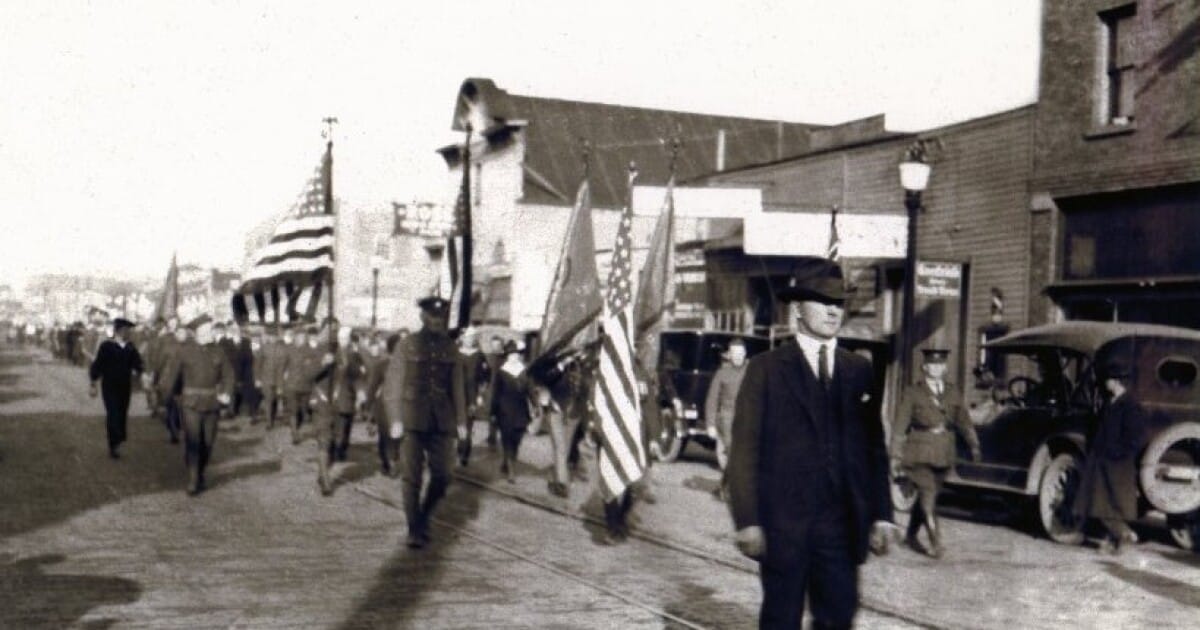
They'd already burned the hall once. Beaten the Wobblies in the streets. Run them out of town. And the lumber barons made it clear they'd do it again. So when the Armistice Day parade stopped in front of the IWW hall in 1919, someone was going to die.
Before we talk about persecution in this country, let's be clear about who's actually been persecuted. Not the people waving flags and screaming about their freedoms. The people organizing workers. The people fighting for civil rights, for human dignity. The people who thought maybe loggers deserved beds without lice. Those are the ones who got federal raids, mass arrests, deportations without trial, and necktie parties under bridges. That's the actual American tradition. Today is no different.
1919: The Year Capital Went to War
That year saw over 3,600 strikes - more than any year in American history. In February, 65,000 workers shut down Seattle. In September, 350,000 steelworkers walked. Boston cops struck. 400,000 coal miners nationwide. Workers were done waiting.
The response was brutal. Attorney General A. Mitchell Palmer unleashed federal raids across the country. Ten thousand arrests in a single month. Mass deportations without trial. A 24-year-old J. Edgar Hoover built files on radicals and infiltrated unions. States criminalized IWW membership. The press shrieked about Bolsheviks at every picket line. This was the First Red Scare - state-sanctioned union busting wrapped in patriotic bunting. If this sounds familiar, that's because the playbook hasn't changed.
The Wobblies took the worst of it. Federal agents had already raided every IWW office nationwide in 1917, hauling away five tons of documents from Chicago alone. By 1919, over 200 were rotting in federal prison under the Espionage Act for opposing the war or daring to strike. Washington made Wobbly membership illegal. Vigilantes lynched organizer Frank Little in Montana and left his body as a warning. Mobs destroyed halls with police blessing. The government made it clear: crushing the IWW was patriotic duty.
Centralia Gets Ready
Centralia, Washington ran on timber - six sawmills churning through men as fast as trees. The Wobblies wanted the eight-hour day, safety equipment, beds without lice, wages you could live on. The lumber bosses wanted them gone.
First hall in 1917: evicted when the landlord found out who they were. Second hall, spring 1918: during a Red Cross parade, businessmen and Elks broke ranks, stormed it, smashed everything, hauled the furniture into the street and burned it in a bonfire. Then they dragged Wobblies to the edge of town and beat them bloody, forcing them through a gauntlet with clubs. Don't come back.
The Wobblies came back. Opened a new hall in the Roderick Hotel, September 1919. Everyone knew what was coming. The hotel owner begged police for protection - denied. The Wobblies' lawyer Elmer Smith wrote the governor - ignored. They printed leaflets: "The profiteering class of Centralia have of late been waving the flag of our country in an endeavor to incite the lawless element of our city to raid our hall and club us out of town." Nobody gave a damn.
October 20: the Centralia Citizens' Protective League met - lumber bosses and American Legion members plotting. One witness later testified the chairman said he didn't support raiding the hall himself, but "no jury in the land would ever convict" anyone who did.
Smith told the Wobblies they had the right to defend their property. They armed themselves. Seven stayed in the hall. Others took positions in nearby hotels and on Seminary Hill - watching.
The Parade
November 11, 1919. First anniversary of Armistice Day. The parade wound through town - uniforms, flags, Boy Scouts, the Elks band. Some marchers carried rubber hoses and gas pipes. A postmaster and minister carried nooses.
The route had been changed last minute to pass the IWW hall. When the American Legion contingent reached the Roderick Hotel, they stopped. Warren Grimm, post commander and decorated WWI officer fresh from Siberia, called out: "Halt. Close up." The front ranks marked time.
Who fired first? Still disputed. The Legion claimed unprovoked attack on a peaceful parade. The Wobblies said Legionnaires rushed the hall. What's certain: shots erupted from multiple directions. Grimm fell in the doorway, chest shot. Arthur McElfresh took one to the head. Ben Casagranda went down in the street.
Wesley Everest - Wobbly, WWI vet, Spruce Production Division - ran out the back with his rifle, firing. He wounded two more in the alley. They chased him to the Skookumchuck River. He couldn't cross the current. Dale Hubbard caught up pointing a jammed pistol. Everest didn't know. He shot Hubbard three times. Hubbard died that night.
They caught Everest, beat him, dragged him to jail with a belt around his neck while the mob kicked and punched. Four Legionnaires dead. The hall destroyed, furniture burning. Vigilantes rounded up every suspected Wobbly.
The Lynching
Around 7:30 PM someone cut downtown power. Lights out. Two thousand gathered at the jail. The doors opened - guards handed him over - and they pulled Wesley Everest from his cell.
Threw him in a car. Drove to Mellen Street Bridge. Hanged him. Cut him down. Hanged him again from a different spot. Then shot him. His body swung through the night.
Morning: they cut him down, left him in the river bottom until sunset, then dumped his corpse on the jail floor - rope still around his neck - in full view of the IWW prisoners. Two days it stayed there. Both morticians refused to touch it. Eventually buried in a pauper's grave.
Many accounts claim castration. The story appeared four months later in a Wobbly pamphlet, repeated by John Dos Passos and Howard Zinn. But the police report filed next day mentions no mutilation. None of the prisoners who saw the body said anything at the time. Historian Tom Copeland's review suggests it never happened. A double hanging and bullets were horror enough.
Nobody was charged with Everest's murder. Everyone in town knew who did it.
The Trial
Eleven Wobblies went to trial in Montesano. The problem: Everest (who killed two) was dead. "John Doe Davis" (maybe killed McElfresh) had vanished. Only Grimm's death left - with no proof which defendant did it.
So they charged conspiracy to murder. Witnesses intimidated. Evidence buried. Jury terrified. Four jurors later signed affidavits admitting they voted guilty fearing for their families. By 1924, more came forward saying they'd been too scared to tell the truth.
Seven convicted of second-degree murder. Judge John Wilson gave them 25-40 years - far beyond the standard 10 for that charge. The jury had recommended leniency. A "labor jury" organized by Seattle, Portland, Everett, and Tacoma unions sat through the whole trial and returned not guilty.
Eugene Barnett, Ray Becker, Bert Bland, O.C. Bland, James McInerney, John Lamb, and Britt Smith: prison. Loren Roberts: guilty but insane, asylum. Elmer Smith, the lawyer: acquitted, then disbarred and hounded for years. Ray Becker, last out in 1939. Twenty years.
What They Bought
The massacre worked. Washington criminalized IWW membership. Wobblies arrested in logging camps statewide. Federal roundups nationwide. Halls closed. Movement fractured. Lumber bosses got uninterrupted control over men who worked themselves to death in the woods.
1924: Centralia erected "The Sentinel" in George Washington Park honoring the four dead Legionnaires - "slain on the streets of Centralia Washington Armistice Day Nov. 11 1919 while on peaceful parade wearing the uniform of the country they loyally and faithfully served."
1997: a mural memorializing Wesley Everest finally went up facing the statue, after bitter Legion opposition. Everest rising from his grave, half Army uniform, half worker's overalls, fists raised.
1991: Everest's grave added to the National Register of Historic Places. People still leave union literature there on Labor Day.
2024: after decades of lobbying, the IWW got a small memorial plaque next to the Sentinel listing the convicted men's names - "defending their union hall."
The state never apologized. 2023: the IWW petitioned Governor Jay Inslee to pardon the eight. Five jurors had recanted. FBI withheld evidence. The trial was a recognized travesty. Inslee refused.
A massacre by lumber bosses and their hired patriots. A lynching everyone saw coming, nobody stopped. Twenty years for believing workers deserved human treatment. A century later, the state still won't say their names without choking.
Sources
- Tom Copeland, The Centralia Tragedy of 1919: Elmer Smith and the Wobblies (2019)
- Aaron Goings, Brian Barnes, and Roger Snider, The Red Coast: Radicalism and Anti-Radicalism in Southwest Washington (2019)
- University of Washington Libraries, Centralia Tragedy Collection
- Esther Barnett Goffinet, Ripples of a Lie: The Centralia Tragedy and Eugene Barnett (2009)
- John McClelland Jr., Wobbly War: The Centralia Story (1987)
- HistoryLink.org, "Four men die in the Centralia Massacre on November 11, 1919"