Bear River Massacre (1863)
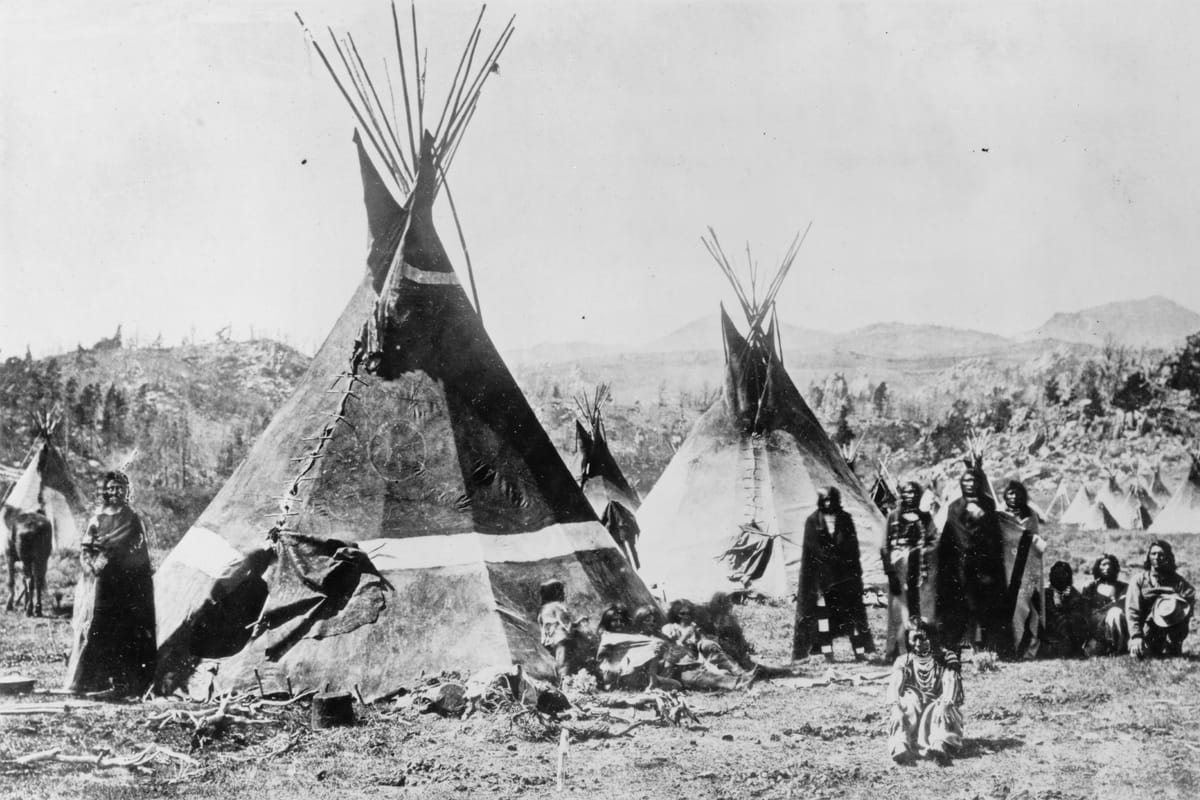
The largest massacre of Native Americans in U.S. history happened in Idaho. Over 400 Shoshone men, women, and children were slaughtered in a winter dawn attack. You've probably never heard of it. That's not an accident.
Content warning: This article contains graphic descriptions of mass murder, including violence against infants and children, sexual violence, and torture.
The Theft
Cache Valley - Seuhubeogoi in Shoshone, "Willow Valley" - wasn't just the Northwestern Band's home. It was the center of their world. For generations beyond counting, they moved through the valley in seasonal cycles, fishing Bear River for trout, hunting elk and bison in the mountains, gathering seeds in the meadows. The land wasn't property to them. It was relationship, identity, the place of their creation.
Then Mormon settlers arrived in 1860 and severed that relationship. They took everything. Not some of the land. All of it. Every acre, every creek, every hunting ground. Within three years, the Shoshone had been pushed to the edges of their own homeland, watching white farmers work fields that had sustained their families since time before memory.
When you steal someone's ability to eat, you force them into a choice: starve quietly or fight back. Young Shoshone men chose to fight. They raided supply wagons, took cattle, exacted tolls from miners passing through on their way to gold fields. The settlers and territorial officials screamed for the Army to do something about the "Indian problem." They got their wish.
The Glory Hunter
Colonel Patrick Edward Connor was pissed off. The Irish immigrant had clawed his way up through the U.S. Army and wanted glory fighting Confederates in the Civil War. Instead, Lincoln stationed him in Utah Territory with his California Volunteers to watch Mormons and protect mail routes. Connor and his men were bored, angry, and looking for blood.
So Connor found another enemy. In January 1863, miners claimed Shoshone warriors had attacked them, killing two. Connor enthusiastically accepted a territorial marshal's request for help arresting Shoshone chiefs Bear Hunter, Sagwitch, and Sanpitch. But Connor had no intention of making arrests. Before leaving Fort Douglas in Salt Lake City, he announced to his men that he intended to take no prisoners.
The order to his troops was clear: "Remember, nits make lice." Kill the children too.
Even by the brutal standards of 1860s Indian Wars, this was extreme. Officers at the Sand Creek Massacre a year later refused similar orders - when Colonel John Chivington used the same "nits make lice" phrase, Captains Silas Soule and Joseph Cramer and their entire companies wouldn't fire on women and children. Kit Carson, a hardened Indian fighter, said of Sand Creek: "I never yet drew bead on a square or a papoose and I despise the man who would." Congressional investigations condemned both massacres in the strongest terms.
But Connor wasn't alone. He was part of a trend. Colorado Governor John Evans was issuing proclamations calling on citizens to "kill and destroy" all hostile Indians. General Samuel Curtis told Chivington before Sand Creek: "I want no peace till the Indians suffer more." This was genocide as emerging policy - not the actions of a rogue officer, but doctrine creeping into official practice. Connor was a pioneer of it.
The Attack
On the frozen morning of January 29, 1863, around 200 California Volunteers rode into the Northwestern Band's winter camp at Boa Ogoi - the confluence of Bear River and Beaver Creek, near present-day Preston, Idaho. It was 6 a.m. Families were sleeping in their lodges, trying to stay warm in brutal cold. Around 450 Shoshone - men, women, children, elders - had gathered there for the winter, believing a peace treaty would protect them.
Chief Bear Hunter had been warned. One Shoshone leader reportedly dreamed of "pony soldiers" killing their people. But Bear Hunter trusted the treaty. That trust was a death sentence.
The Shoshone warriors scrambled to defensive positions behind an embankment along Beaver Creek. They held off the first cavalry charge - 23 soldiers were killed or wounded in that initial assault. Connor flanked the camp on both sides and encircled the village. By 8 a.m., the Shoshone defenders ran out of ammunition. They tried to surrender.
Connor's men showed no mercy.
The Slaughter
What followed wasn't combat. It was four hours of methodical extermination. Soldiers shot every Shoshone they could find - men, women, children hiding in the willows along the creek. Families trying to flee across the frozen Bear River were gunned down mid-stream. Mothers holding babies were killed where they stood.
When bullets ran low, soldiers switched to axes and bayonets. Infants were grabbed by the ankles and had their heads smashed against rocks. Women already dying from bullet wounds were raped, then had their skulls split open with axes. Chief Bear Hunter was captured and tortured - soldiers ran a red-hot bayonet through both his ears before killing him.
One survivor, a woman named Anzee-Chee, hid under a riverbank with ten other women. When her newborn started to cry, she drowned her own child to keep the soldiers from finding them.
Between 250 and 400 Shoshone were killed. Historians can't pin down an exact number because soldiers didn't count bodies, and surviving Shoshone were too traumatized and scattered to know who was missing. Chief Sagwitch survived, badly wounded. So did Yeager Timbimboo (Pisappih, or Red Oquirrh), then a teenager, who would later tell his granddaughter Mae everything he witnessed. A handful of children survived and were taken away - at least 20 were sent to Indian boarding schools, another layer of cultural genocide piled on top of mass murder.
The Volunteers burned 75 lodges, stole 175 horses, and seized 1,000 bushels of the Shoshone's winter food supply.
Then they left the corpses where they fell - for wolves and crows.
The soldiers who died got military burials back at Camp Douglas. The Shoshone dead were left to rot in the snow.
The Rewards
Connor and his California Volunteers returned to Fort Douglas and were treated as heroes. Newspapers celebrated the "victory." The Mormon-run Deseret News expressed gratitude for the troops' work, hoping they would "wipe out" the Indians. Mormon settlers in Cache Valley called Connor's attack "an intervention of the Almighty."
Connor was promoted to brigadier general. What he did at Bear River became doctrine. Attacking sleeping winter camps. Showing no mercy. Killing women and children. This became standard U.S. Army practice for later campaigns against Native people across the West. He went on to lead the Powder River campaign against the Sioux and Cheyenne.
Not one soldier faced consequences. Not one.
The Lie
For over a century, the massacre was erased, sanitized, or outright lied about. When a monument was finally erected at the site in 1932, it called the slaughter "The Battle of Bear River." It praised Connor for engaging "450 Indians" and claimed the troops recovered "much stolen property." The plaque listed "about 90 combatant women and children" among the dead, as if women and children were enemy soldiers.
The massacre happened during the Civil War, when the nation's attention was fixed on battles in the East. Few newspapers outside California and Utah even covered it. The Shoshone survivors had no political power, no voice in the press, no way to force the truth into the historical record. White settlers didn't want to remember what they'd called down on their neighbors. So the country forgot.
Except the Shoshone didn't forget.
The Fight for Memory
Mae Timbimboo Parry, granddaughter of survivor Yeager Timbimboo, spent decades fighting to tell the truth. She recorded oral histories from survivors, lobbied Congress, presented evidence, and pushed historians to call it what it was: a massacre. She "ran out of time," as her grandson Darren Parry puts it - she died in 2007 without publishing all her work. But her grandson picked up the fight.
Darren Parry, former chairman of the Northwestern Band of the Shoshone Nation, led the effort to reclaim the massacre site. In 2008, the tribe purchased part of the land. In 2018, they bought 600 more acres. They're restoring the ecology - planting native willows, removing invasive species, bringing the land back to what it looked like in 1863. They're building the Boa Ogoi Cultural Interpretive Center to educate visitors and honor the dead.
The site was finally designated a National Historic Landmark in 1990. But it took another generation of Shoshone activism to get the monument's language changed from "battle" to "massacre."
Ten years after the massacre, many survivors - including Chief Sagwitch - converted to the LDS church. It wasn't spiritual awakening. It was survival. The Mormons who had stolen their land and called down the slaughter were the power in the region. Converting meant access to farming plots, to some measure of safety, to a path forward in a world where every other door had been slammed shut. That's the kind of choice genocide forces on survivors.
The Story We Carry
Bear River was the deadliest massacre of Native Americans by the U.S. military in American history. More died there than at Wounded Knee (1890), Sand Creek (1864), or any other slaughter we bother to remember. Yet it remains almost unknown, buried under Civil War history, Mormon complicity, and a century of deliberate historical amnesia.
Connor wasn't some rogue officer. He was following orders, carrying out policy, doing exactly what settlers and territorial officials wanted. The Mormon community that had stolen Shoshone land celebrated when those same Shoshone were exterminated. The federal government promoted the man who ordered it. And when it was over, everyone agreed to call it something else.
This is how genocide works. Not just the killing, but the forgetting. The renaming. The monuments that lie. The textbooks that skip over inconvenient massacres because they happened during a "more important" war. The passive voice that erases the killers: "lives were lost" instead of "soldiers murdered families in their beds."
The Shoshone are still here. They survived Connor, survived the land theft, survived forced conversion, survived a century of silence. And now they're making sure their ancestors' voices are finally heard. The bodies cry out from Boa Ogoi - the Bear River - and the descendants are answering.
But the fight isn't over. The Northwestern Band of the Shoshone Nation still lacks a formal reservation. They're still fighting for federal recognition of land rights, still pushing for acknowledgment of what was stolen and what was done. The massacre isn't just history. Its consequences are daily reality.
We owe them the truth. All of it. The babies killed with axes. The women raped and mutilated. The chief tortured with a red-hot bayonet. The soldiers who got medals while corpses froze in the snow. The settlers who thanked God for the slaughter. The country that forgot because remembering was inconvenient.
Bear River wasn't a battle. It was a massacre. Call it what it was.
Sources
- Darren Parry, The Bear River Massacre: A Shoshone History (By Common Consent Press, 2019)
- Brigham D. Madsen, The Shoshoni Frontier and the Bear River Massacre (University of Utah Press, 1985)
- Brigham D. Madsen, Glory Hunter: A Biography of Patrick Edward Connor (University of Utah Press, 1990)
- Rod Miller, Massacre at Bear River: First, Worst, Forgotten (Caxton Press, 2008)
- Patrick Edward Connor, Official Report on the Bear River Massacre (February 6, 1863)
- Kass Fleisher, The Bear River Massacre and the Making of History (SUNY Press, 2004)
- Jerry O'Sullivan, "Gloryhunter: Kerry's Indian Killer" (Radio Kerry documentary, August 2023)
- Northwestern Band of the Shoshone Nation oral histories and archival materials