Harlem Erupts - 1935
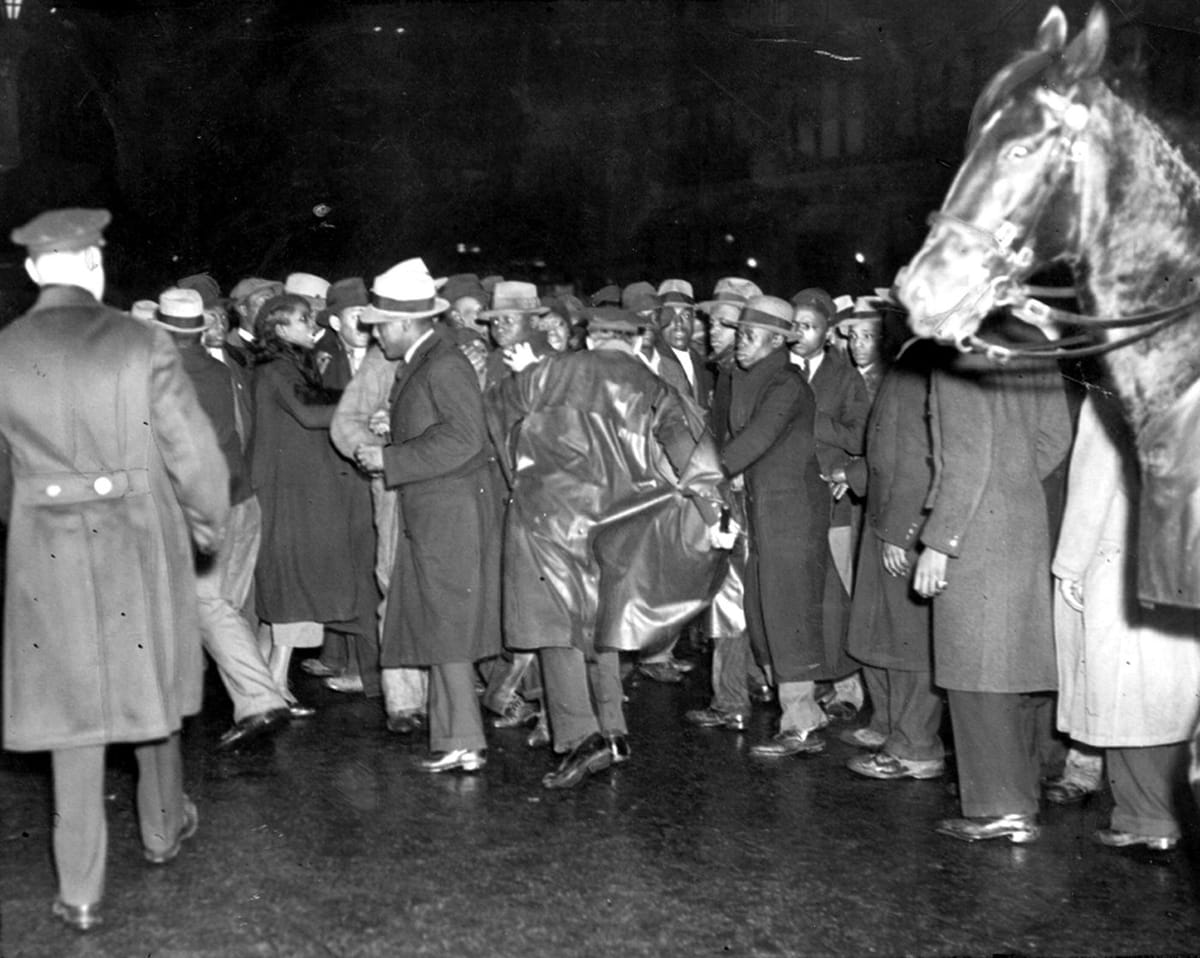
Harlem was the cultural heart of Black America, but it was also a place where poverty, discrimination, and police violence crushed daily life. The 1935 Harlem Riot really was a riot - stores smashed, streets on fire, police and residents clashing. But that chaos wasn’t random. It was born of brutal oppression, of people penned into a neighborhood and treated like their lives didn’t matter. Calling it just a riot let the city dodge responsibility for the misery that caused it.
A Neighborhood Built as a Cage
Harlem wasn’t just a community that grew by choice. It was engineered by segregation. When white landlords overbuilt and panicked about Black families moving in, banks and real estate speculators pushed Black New Yorkers into Harlem and shut them out of other neighborhoods. Restrictive covenants and redlining trapped them there. Rents were higher, conditions worse, and overcrowding relentless. The Great Migration only intensified this, with Black Southerners arriving in New York and finding Harlem as the only option. It became both a cultural powerhouse and a cage… and the police enforced the walls.
The Spark
On March 19, 1935, a rumor tore through Harlem. A teenaged boy, Lino Rivera, had been caught stealing a penknife from a store on 125th Street. Word spread that store clerks had beaten him to death in the basement. The truth was that Rivera was alive and the store manager, afraid of the growing crowd, snuck him out a back door. No one told the community that. Crowds gathered outside the store, demanding answers. Police showed up ready for a fight, like always. The tension snapped.
The Escalation
Before 1935, Harlem was heavily policed, but not to keep residents safe. White officers were assigned to the neighborhood with little respect for the people who lived there. Harassment, arbitrary arrests, and beatings were constant. Residents paid higher rents for worse housing, faced job discrimination, and were over-policed yet under-protected. When they called for help, police often didn’t come. When they protested, police came swinging.
That’s exactly what happened once the crowd formed. Anger turned into shattered glass and smashed storefronts. Police poured into Harlem, swinging clubs and firing shots. Over three days, businesses were looted, windows smashed, and the streets turned into a battlefield. Three people were killed, hundreds were injured, and nearly 100 were arrested. Official reports counted over $2 million in damage.
The People
The dead included Black New Yorkers who were already living with high unemployment, overcrowded apartments, and inflated prices from racist landlords and shopkeepers. They were neighbors, workers, and families who had finally had enough. Langston Hughes wrote about Harlem’s anger, hunger, and broken promises, saying the spark was less about one boy and more about years of exploitation.
The Narrative That Got Told
The mayor and newspapers branded Harlem violent and lawless. “Negro Rioters” blared the headlines, ignoring the poverty, police brutality, and discrimination at the root of it all. Mayor Fiorello LaGuardia commissioned a report. It came back clear: Harlem’s problems were systemic. Overcrowding, unemployment, and racist policing were driving people to the edge. The report was filed away and ignored. Just like today, they blamed the maginalized community for the problems cause by marginaliztion. Same story. New hats.
The Story We Carry
A community living under constant pressure and abuse was lied to and then beaten when they demanded the truth. The Harlem Riot of 1935 revealed what Black New Yorkers had been saying for years: you cannot deny people dignity, safety, and fair treatment without consequences. The press called it a riot, they always do. But it wasn’t the last time Harlem rose up. Again in 1943, again during the uprisings of 1964 and 1968, the same cycle of racism, poverty, and police brutality sparked fresh uprisings. Each time the press blamed the community, and each time the root causes were ignored.
We still ignore them today.
Sources
- Cheryl Greenberg, Or Does It Explode? Black Harlem in the Great Depression (Oxford University Press, 1991)
- Nathan Irvin Huggins, Harlem Renaissance (Oxford University Press, 1971)
- Langston Hughes, “Color Lines in Harlem” (1935 essays and columns)
- Report of Mayor LaGuardia’s Commission on the Harlem Riot of March 19, 1935