Los Angeles High School Walkouts, 1968
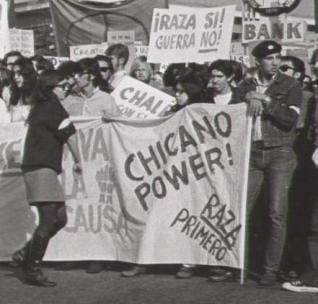
March 1968. While the country convulsed over Vietnam, while Martin Luther King Jr. prepared for the Poor People's Campaign (three weeks before his assassination), while college students occupied buildings from Columbia to Berkeley, thousands of Chicano teenagers in East Los Angeles walked out of their classrooms and didn't come back.
The Chicano movement had been mostly rural until then - farmworkers in the fields with Cesar Chavez, fighting for union recognition. The East LA Blowouts moved the fight to the city, and put youth in charge. The largest high school protest in American history, and the first major action of what would become the urban Chicano civil rights movement.
What did they demand? Not revolution. Not even equity, really. Just basic shit like enough textbooks, teachers who didn't call them stupid for speaking Spanish, and maybe - just maybe - acknowledgment that Mexican Americans existed in history books.
For this, the state arrested 13 organizers and threatened them with 66 years in prison.
The System Working Exactly as Designed
East LA's schools weren't failing. They were succeeding at their actual purpose - keeping brown kids in their place. This was the machinery of segregation in 1968, just operating under a different name than the Jim Crow South.
At Garfield High, 57% of students dropped out. At Roosevelt, 45%. Class sizes hit 40 students. One counselor for every 4,000 kids. Teachers who'd tell you to your face that Mexicans couldn't handle college prep courses, better learn to fix cars or clean houses. Some schools still punished children for speaking Spanish in 1968. Others locked the bathrooms during lunch and used janitorial duty as discipline.
The 130,000 Latino students making up 75% of East LA's schools got hand-me-down textbooks, crumbling buildings, and teachers who mostly wished they'd been assigned somewhere whiter. Meanwhile, schools in affluent neighborhoods got new everything.
This wasn't unique to LA. Across the Southwest, Mexican American students faced the same rigged game - high dropout rates, vocational tracking, punishment for speaking Spanish, erasure from the curriculum. But East LA was the powder keg, the moment when students connected their local fight to the national upheaval around civil rights, the war, and who got to decide their futures.
Students knew the score. In 1967, Paula Crisostomo and Vickie Castro presented demands to the LA School Board, backed by surveys from hundreds of students documenting the discrimination. The board listened politely, nodded, and did fuck-all.
A Teacher Who Gave a Damn
Sal Castro taught social studies at Lincoln High and committed the radical act of believing his students mattered. He taught them Mexican American history - material the district pretended didn't exist. He told them their language wasn't shameful, their culture wasn't inferior, and they had every right to demand better.
When students came to him after the school board blew them off, Castro helped them organize. He connected them with college activists and the Brown Berets. Together they crafted 36 specific demands and planned coordinated walkouts.
The night before it started, FBI director J. Edgar Hoover sent a memo to local police: stop "nationalist movements in minority communities." The feds saw teenagers asking for decent schools as a threat to national security.
The Week Everything Broke Open
It started early and messy. March 1, Wilson High's principal canceled a student production of "Barefoot in the Park," calling it too risqué for a Mexican American audience. Three hundred students walked out. Wilson wasn't even supposed to be part of it.
March 5, Garfield High. Two thousand students hit the streets. School officials called the cops immediately.
At Roosevelt on March 6, administrators locked the gates to trap students inside. Kids climbed the fences anyway. Helmeted police were waiting on the other side to beat them. At Belmont on March 8, police invaded the school, arrested students, beat them bloody.
By week's end, somewhere between 15,000 and 22,000 students had walked out across seven schools. They rallied at Hazard Park carrying signs reading "Chicano Power" and "Viva la Raza." They wore images of feet on their clothing - symbols of the walkouts. They said they wouldn't go back until their demands were met.
The schools lost funding for every missing student. Money talks. The board finally agreed to listen.
The Betrayal
March 28, the LA Board of Education heard the demands: bilingual education, Latino teachers and administrators, smaller classes, books that acknowledged Mexican Americans existed, an end to racist discipline, better facilities.
The board's response? No money. Can't help you. Meeting adjourned.
Three days later - March 31, prom night - police arrested 13 organizers on conspiracy charges carrying up to 66 years in prison. Teacher Sal Castro. Student leaders. Brown Beret members. Newspaper editors. They became the East LA 13.
Sal Castro lost his job. Community members staged sit-ins at the Board of Education offices for eight straight days until 35 protesters were arrested. The board finally reinstated Castro in October, then spent five years shuffling him to schools far from Latino students.
The East LA 13 fought their charges for two years. In 1970, a court finally dropped the indictments as unconstitutional. But by then, the movement's energy had been drained into legal defense instead of educational justice.
Most of the original demands were never met.
What It Meant
The walkouts didn't fix the schools. Funding gaps persist. Teacher shortages in brown schools continue. The curriculum still erases Latino history more often than it includes it. The school-to-prison pipeline keeps humming along.
But something shifted. College recruitment of Latino students increased. Districts hired more Chicano teachers. Bilingual education expanded. And crucially, a generation learned they didn't have to accept what the system handed them.
The tactics spread - 1994 walkouts against Prop 187, 2006 protests against anti-immigrant legislation, 2009 demonstrations against Arizona's racial profiling law. Every time students walked out after 1968, they carried the Blowouts with them.
Many organizers reshaped their fields. Moctesuma Esparza brought more Chicanos into Hollywood. Paula Crisostomo became a school administrator still fighting for reform. Vickie Castro won election to the LA School Board. Carlos Montes organized against police brutality for decades.
They were 15, 16, 17 years old. They climbed fences, faced down cops with guns, risked felony records, and refused to shut up. The state tried to bury them with conspiracy charges. Instead, they sparked a movement that proved teenagers could see the rigging clearer than adults who'd learned to accept it.
The system wasn't broken. It was working exactly as designed - to keep brown kids from getting ideas above their station. The Blowouts said no. Loudly. In the streets. Until someone was forced to hear them.
That's the legacy. Not that they won everything. That they refused to lose quietly.
Sources
- Mario T. García and Sal Castro, Blowout! Sal Castro and the Chicano Struggle for Educational Justice (University of North Carolina Press, 2011)
- Ian Haney López, Racism on Trial: The Chicano Fight for Justice (Harvard University Press, 2003)
- Carlos Muñoz Jr., Youth, Identity, Power: The Chicano Movement (Verso, 1989)
- "East L.A., 1968: 'Walkout!' The day high school students helped ignite the Chicano power movement," Los Angeles Times, March 1, 2018
- "They faced 66 years in prison. The 'Eastside 13' and how they helped plan the East L.A. walkouts," Los Angeles Times, March 8, 2018
- Global Nonviolent Action Database, Swarthmore College
- Library of Congress, Latinx Resource Guide: 1968 East Los Angeles Walkouts