Moral Panics Are Killing Us
America keeps falling for the same bullshit: moral panics. They’ve killed before. They’re killing now. We need to stop.
(this is a bonus post, not an official a R-a-D entry, move on if you don't want to talk about how modern politics are shaped by the oldest of tricks)
This is, after all, a history blog, and history makes the echoes impossible to miss. The same tactics get used again and again, each time with new victims.
We’re predictable. Fear is easy to trigger, and the powerful know it. They exploit it by ascribing harm to the harmless and hijacking bias, making lies plausible because prejudice has already primed the ground. Historians call this a moral panic: bogeyman politics dressed up as morality. This week made it painfully obvious that many still can’t recognize them. People are getting hurt and killed because of it. And here’s what’s worse: these aren’t accidents of fear anymore. Today, panic is engineered... turned into a business model, a campaign strategy, a weapon.
Carl Sagan once put it better than anyone else:
“Even a casual scrutiny of history reveals that we humans have a sad tendency to make the same mistakes again and again. We're afraid of strangers or anybody who's a little different from us. When we get scared, we start pushing people around. We have readily accessible buttons that release powerful emotions when pressed. We can be manipulated into utter senselessness by clever politicians. Give us the right kind of leader and, like the most suggestible subjects of the hypnotherapists, we'll gladly do just about anything he wants - even things we know to be wrong.”
-Carl Sagan, The Demon-Haunted World
History Shows Us What a Moral Panic Looks Like
This isn’t abstract. Strikes branded as riots. Immigrants cast as enemies. Queer people turned into scapegoats. Lives destroyed, voices silenced, communities crushed. The press fans the flames. Politicians vow to “protect the children.” Cops or soldiers step in. Years later, when everyone admits it was nonsense, nobody in power pays a price.
Take Salem, where neighbors hanged neighbors as witches. Fear and rumor were enough to send twenty people to the gallows, and one man was pressed to death. Centuries later, Massachusetts overturned the convictions and offered compensation, but the damage was long done.
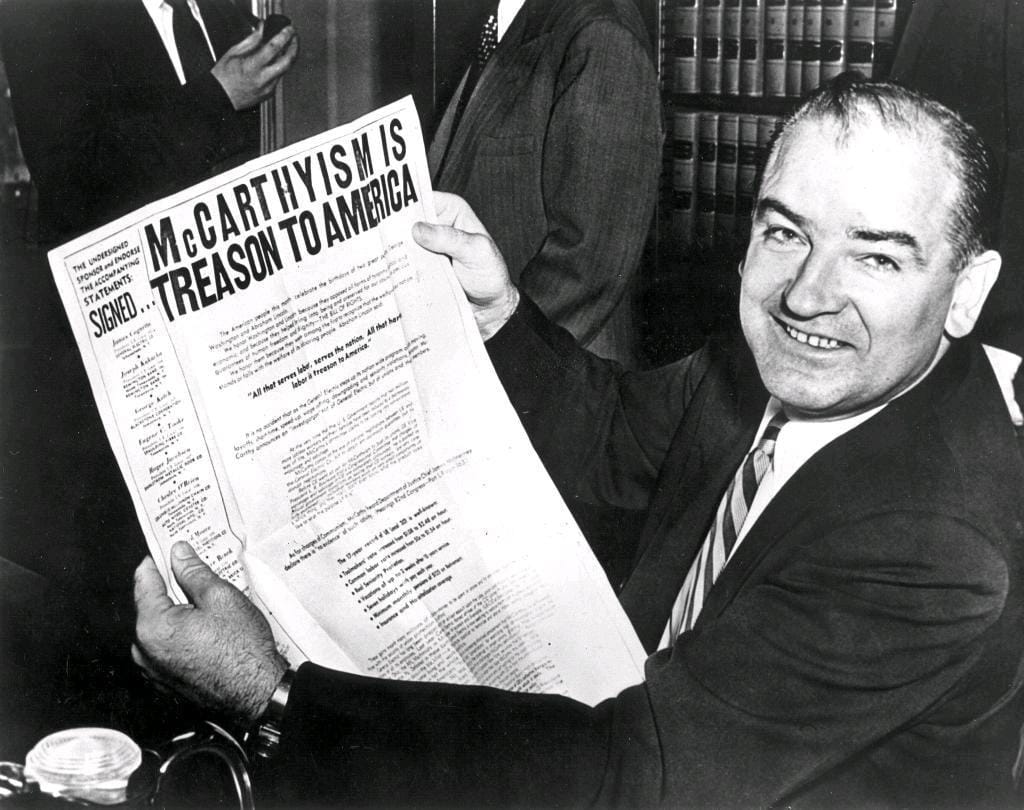
The Red Scares followed the same script. In 1919–1920 and again in the 1950s, union organizers, immigrants, and leftists were rounded up, jailed, deported. Entire movements were smeared as communist plots. Lives were destroyed, not for what people did, but for what they were labeled. Harmless groups were painted as threats, with prejudice turned into proof. The last wave ended in the shame of McCarthyism, a spectacle that wrecked lives and credibility alike.
The Satanic Panic of the 1980s and ’90s put parents and daycare workers in prison for crimes that never happened. Police chased wild stories of ritual abuse, fueled by talk shows and tabloids. Decades later, many convictions collapsed-but only after years stolen.
The Lavender Scare of the 1950s targeted queer Americans in government. Thousands lost jobs under the claim they were a security threat simply because of who they loved. Some died by suicide, crushed by loss and public shame, casualties of a panic that equated identity with treason.
A generation later, Anita Bryant’s “Save Our Children” crusade recycled the same script. Gay teachers were painted as predators, protections rolled back, and the Briggs Initiative fueled. It created the blueprint for today’s anti-trans campaigns: invoke children, manufacture fear, ascribe harm to harmless people by tapping into bias, and ride the panic into power.
Immigration panics have always followed the same script. In the 1850s, the Know-Nothing movement branded Irish and Catholic newcomers as enemies of American values. Later, Chinese miners in the West, Italian and Slavic coal workers, and Mexican laborers were scapegoated as agitators or criminals whenever wages fell or strikes broke out. Each wave of newcomers was painted as a corrupting threat, their very presence turned into proof of danger. In the 2010s and beyond, talk of immigrant “caravans” became a centerpiece of political campaigns, vast hordes supposedly marching on the border. At the same time, myths of migrant crime are repeated endlessly, despite data showing immigrants commit crimes at lower rates than native-born citizens. These were never real threats, only recycled panics: invented invasions and fabricated dangers, stoked for headlines and votes. The target shifts, but the playbook never does.
The pattern is the same: hysteria takes hold, scapegoats are chosen, and lives are shattered.
Now it’s trans people in the crosshairs, again. Kids denied medical care. Parents harassed. Teachers silenced. Lawmakers banning books and care in the name of “protecting children.” Threats escalate: bomb threats against hospitals, public calls for doctors to be executed, demands for forced hospitalization and “treatments,” genocidal language aimed at people who pose no threat at all. It’s the Lavender Scare and Save Our Children all over again, reheated for a new generation, with bias hijacked and the harmless painted as mortal dangers. People are dying because of it.
The names change, the script doesn’t. It’s as if we’ve memory-holed the Lavender Scare and Save Our Children campaigns entirely, acting like they never happened-even though today’s panic is built on their bones.
Demonizing "The Left"
It’s growing. The targets are anyone labeled “the left.” Just this week the government, with the FCC leading the charge, leaned on a network to pull a critic of the president off the air. The Vice President went on a national podcast and spread a brazen and easily disproved lie about “left-wing violence,” painting opponents as enemies of the state. The President shrugged at real right-wing violence on live TV, then justified right-wing violence. He declared “Antifa” a “major terrorist organization.” Antifa isn’t an actual organization, and no such designation exists. These moves weren’t policy; they were signals, easy to read as a greenlight for violence against dissent. Any dissent. Don’t like what someone says? Call them Antifa. Call them woke. Dox them. Or worse. It tells the mob: the State has your back.
That was all just this week. Just. This. Week.
This isn’t policy-it’s panic theater. It brands dissent itself as dangerous. It’s bogeyman politics, and it will get people killed.
Worse, it fits a bigger pattern of modern McCarthyism. Then it was “communists.” Today it’s “woke.” The label shifts, but the tactic is the same: paint swaths of Americans as enemies, justify censorship and surveillance, and create a culture where fear silences opposition. Network personalities and right-wing influencers go further, openly calling for war against “the left.” Actual war. Teachers and librarians face harassment, doxing, even threats for resisting book bans. We’ve seen this movie before, and it ends with blacklists, ruined lives, and more dangerous concentrations of power.
How Panics Take Shape
Every panic follows the same pattern:
- Scapegoats. A likely harmless group is cast as a moral threat. That threat often confirms pre-existing bias in society. The 'other.'
- Crusaders. Politicians, pundits, or preachers demand action. They posture as guardians of morality, claiming to protect children, families, or the nation itself.
- Amplification. Fringe claims spiral into 'crises.' Sensational anecdotes dominate headlines, while evidence takes a back seat. Media and influencers profit by feeding the frenzy.
- Overreaction. The backlash outweighs any real harm. Laws are passed, careers ruined, communities harassed, violence excused - all in response to a phantom threat.
Once it starts, the cycle feeds itself: anecdotes fuel outrage, outrage drives policy, and the panic outlives the facts. At its core, the trick is always the same: ascribe harm to the harmless and make it believable by hijacking bias already rooted in the culture. It’s how Salem villagers saw witches in neighbors, how immigrants were branded subversives in the Red Scares, and how queer teachers were painted as predators in Save Our Children.
And today there’s a whole industry built to weaponize moral panics. Social media pours jet fuel on it, rumors outrun corrections, bot-farms intentionally amplify bullshit and the loudest voices dominate. Networks, influencers, an entire major American political party thrive on it, profit from it. In 2024, that hoax claiming immigrants were eating cats and dogs wasn’t just viral rumor, it was deliberately pushed by the right-wing disinformation machine and amplified by the GOP’s presidential candidate. An old slander, dusted off and re-sold. That’s the panic playbook.
It was pure bogeyman bullshit. It always is.
The effects are ongoing. Jobs lost. Blacklists drawn. Communities harassed. And people die. The Trevor Project’s 2024 survey found 39% of LGBTQ youth seriously considered suicide in the past year, including nearly half of transgender and nonbinary youth. The Williams Institute reports similar findings for adults, with 44% of transgender adults recently considering suicide.
FBI reporting shows thousands of hate crimes each year, with attacks targeting sexual orientation and gender identity among the most reported. Hate crimes against immigrants and religious minorities have also risen. At the same time, book bans and censorship attempts have surged to levels not seen in decades, with PEN America and the ALA documenting thousands of challenges during the 2023–24 school year.
All of this is connected: moral panics justify targeting groups, and the result is real-world harm, harassment, job loss, isolation, mental-health crises, violence. Moral panics don’t just ruin reputations. They kill.
Why We Need To Get Better At This
We’ve traced the pattern through history, and it hasn’t gone anywhere. Today it unfolds in plain sight: groups branded as enemies, officials stoking fear, media empires cashing in. What once took years to recognize as shameful is happening in real time, and we still struggle to call it what it is.
Panics work. No one is immune. Not you. Not me. Tide pods, MSG, video games, comic books, every generation has silly panics. Most fade without much harm. But when fear is weaponized, when leaders and media empires push it on purpose, the damage is deadly.
Moral panics aren’t about morality. They’re about power. They let the powerful distract, divide, and destroy while ordinary people are left fighting shadows, and each other.
How To Recognize One
So how do you spot one before it’s too late?
- Sudden existential threat. A likely harmless group painted as corrupting or dangerous, without evidence.
- Crusaders. Politicians or pundits claiming they’re protecting “the children” or “our way of life.”
- Anecdotes over data. Outliers dominate headlines while numbers show no crisis.
- Disproportionate response. Outrage, laws, or punishment dwarf the harm.
If you see those patterns, you’re not looking at justice. You’re looking at a panic.
Final Word
I can’t stop moral panics. Neither can you. We can’t stop people from profiting off them either. What we can do is call them out, teach our kids to recognize them, and try like hell to break the loop.
The phrase “moral panic” should be everywhere. It isn’t. Not in schools. Not in media. Not after Hitler, after McCarthy, after Anita Bryant. We live in an age where moral panic is churned out for profit and power, but almost no one calls it what it is. The media still don’t shut them down. They fuel them. If we don’t name it, we can’t fight it.
So let’s elevate the phrase again. Point it out. Be loud. Remind people what happened the last dozen times we fell for the same trick.
Sources
- Carl Sagan, The Demon-Haunted World (1995)
- Massachusetts General Court, 1711 reversal of Salem Witch Trials convictions
- Senate hearings and FBI records on the Red Scares and McCarthyism
- David K. Johnson, The Lavender Scare (2004)
- Trevor Project, National Survey on LGBTQ Youth Mental Health (2024)
- Williams Institute, Reports on Transgender Adult Mental Health
- FBI Hate Crime Statistics (latest annual report)
- PEN America & American Library Association reports on book bans (2023–24)
- Historical accounts of Anita Bryant’s “Save Our Children” campaign (1977–78)
- Contemporary reporting on disinformation campaigns, 2024