The Bay View Massacre: May 5, 1886
Eight Hours or Death
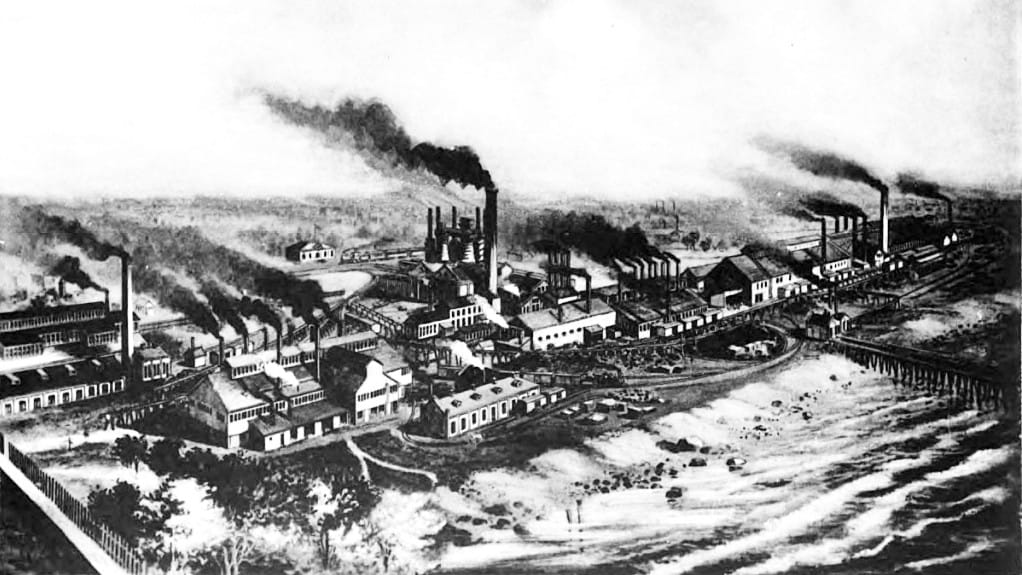
History remembers what the powerful choose to record, and too often the voices of the workers are lost. In the spring of 1886, a nationwide movement erupted for the eight-hour day, sparked by years of twelve- and fourteen-hour shifts that crushed families and fueled anger. More than 300,000 workers struck across the country. "Eight hours for work, eight hours for rest, eight hours for what we will" was the cry. In Milwaukee, thousands poured into the streets. Whole factories shut down. The bosses howled about law and order, but what they really feared was losing their grip on workers they had been grinding into the dirt. At the center were immigrant laborers, many of them Polish steelworkers, ground down by twelve- to fourteen-hour shifts for starvation pay. Their days began before sunrise in choking smoke and furnace heat. They worked until their bodies ached and their stomachs cramped with hunger, then trudged back to overcrowded tenements only to rise before dawn and do it again.
March to Bay View
On May 5, about 1,500 workers marched toward the North Chicago Rolling Mills steel plant in the Bay View neighborhood. Among them was Joseph Jemiolo, just thirteen years old, a Polish immigrant boy already bent by the grind of mill work. Alongside him walked men like Frank Borowicz and Anton Pokorney, immigrants who had crossed an ocean only to be chewed up by twelve-hour shifts for pennies. They were not armed. They weren’t rioters or criminals. They were working people, sick of being tossed aside like scrap. They carried banners calling for dignity and shorter hours. They wanted their fellow workers inside the plant to join them. Families walked too, wives, daughters, neighbors, swept up in the march for justice. Local papers quickly framed the march as 'foreign agitation.' Headlines warned of 'un-American' threats from Polish and Eastern European workers-an attempt to cast the strikers as dangerous outsiders rather than desperate people pleading for basic rights.
Fire from the State
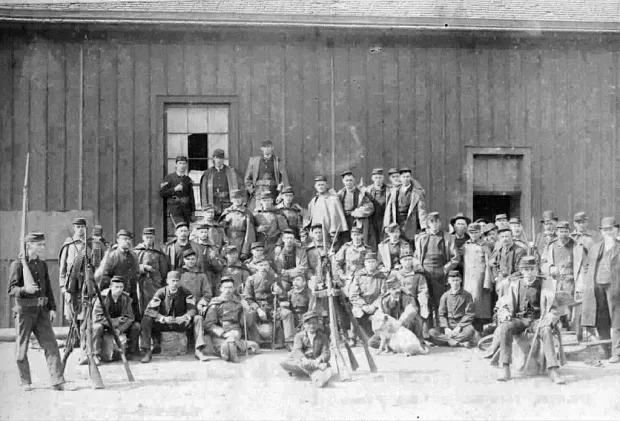
Wisconsin’s governor, Jeremiah Rusk, had already decided he would make an example. He ordered the state militia to guard the mill and, if strikers tried to enter, to shoot to kill. He wasn’t interested in order or keeping the peace. He wanted blood, and he made damn sure his men knew it. Rusk later brushed it off with a chilling line: “I seen my duty and I done it.” On the ground, Captain Traeumer twisted it further. He told his men, “Don’t lose your head but wait for the order to fire… pick out your man and kill him.” The casual disregard for life and dignity could not have been clearer.
As the marchers approached, soldiers raised their rifles. The first to fall was Joseph Jemiolo, the thirteen-year-old boy. A child who had labored for their profit was shot dead in front of the crowd. Then more bodies hit the ground. At least seven workers were killed that morning, some accounts say more. None of them had weapons. Their only crime was demanding time to live. It was an atrocity, plain and simple. A Milwaukee Journal reporter described the scene coldly: 'Six companies (roughly 250 soldiers)… took deliberate aim at the advancing crowd and shot to kill.' Their words justified the slaughter rather than questioned it. And just as telling, most papers never even printed the name of Joseph Jemiolo, the thirteen-year-old boy killed first, erasing him from the story to protect the powerful.
The Cost of Defiance
The massacre broke the strike in Milwaukee. For the men and boys in Bay View, a typical day meant twelve to fourteen hours in the mills, choking on smoke and heat for pennies. They staggered home to overcrowded tenements, only to rise before dawn and do it again. That was the life they were defending when the rifles cut them down. In the days after, some employers fired Polish workers outright and replaced them, sneering that Poles were 'too radical.' Suppression came not only with bullets but at the factory gates.
Even as the eight-hour movement faltered in Milwaukee, it raged on elsewhere. Just one day earlier in Chicago, the Haymarket rally had ended in blood and chaos (we will cover that on Saturday, May 6). Bay View’s dead were part of that same national struggle… a fight for time itself, a struggle that would take decades but could never again be ignored.
The Story We Carry
The Bay View Massacre was not a riot. Readers of Riot-a-Day will recognize the pattern: strikes and marches, met with violence from above, later branded as "riots" to excuse the killings. It was workers marching, unarmed, for the simple demand of an eight-hour day. The men who ordered the rifles fired wore uniforms and held office. They murdered workers, not for rioting, but for daring to demand dignity and time. The people who fell wore work boots and carried no weapons but their voices.
We take the eight-hour day for granted now, as if it were always there. It was not. It had to be dragged out of the bosses, kicking and screaming, and bought in blood. The next time you punch out after eight hours, remember someone died so you didn’t get worked to death for pennies. The tragedy is that we have the governor’s smug words and the captain’s kill order preserved, but not the voices of Joseph Jemiolo or the others who fell. The powerful told the tale and tried to bury the history. They still do. But not everyone forgot. Each May in Bay View, workers and neighbors march to the memorial and read the names of the dead. The fight for dignity and time still echoes, carried by those who gather to remember. Bay View was not just a tragedy but an atrocity, and in 2025, American labor is on the retreat. The bosses haven’t stopped trying to take back what workers bled to win.
#RiotADay #LaborHistory #USHistory #History 🗃️
Sources
- Wisconsin Labor History Society, "Bay View Tragedy 1886"
- Wisconsin Historical Society archives on Bay View Massacre
- Libcom.org, "1886: Bay View Massacre"
- WUWM Milwaukee Public Radio, coverage of Bay View Massacre commemorations
- Wikipedia, "Bay View Massacre" (with citations to contemporary newspapers and historical scholarship)
- Milwaukee Notebook, "Bay View Tragedy" (2015)
- National Humanities Center, "The Bay View Massacre of 1886" archive
- Wisconsin Magazine of History, various issues covering the Bay View Massacre