The Bonus Army Conflict, 1932
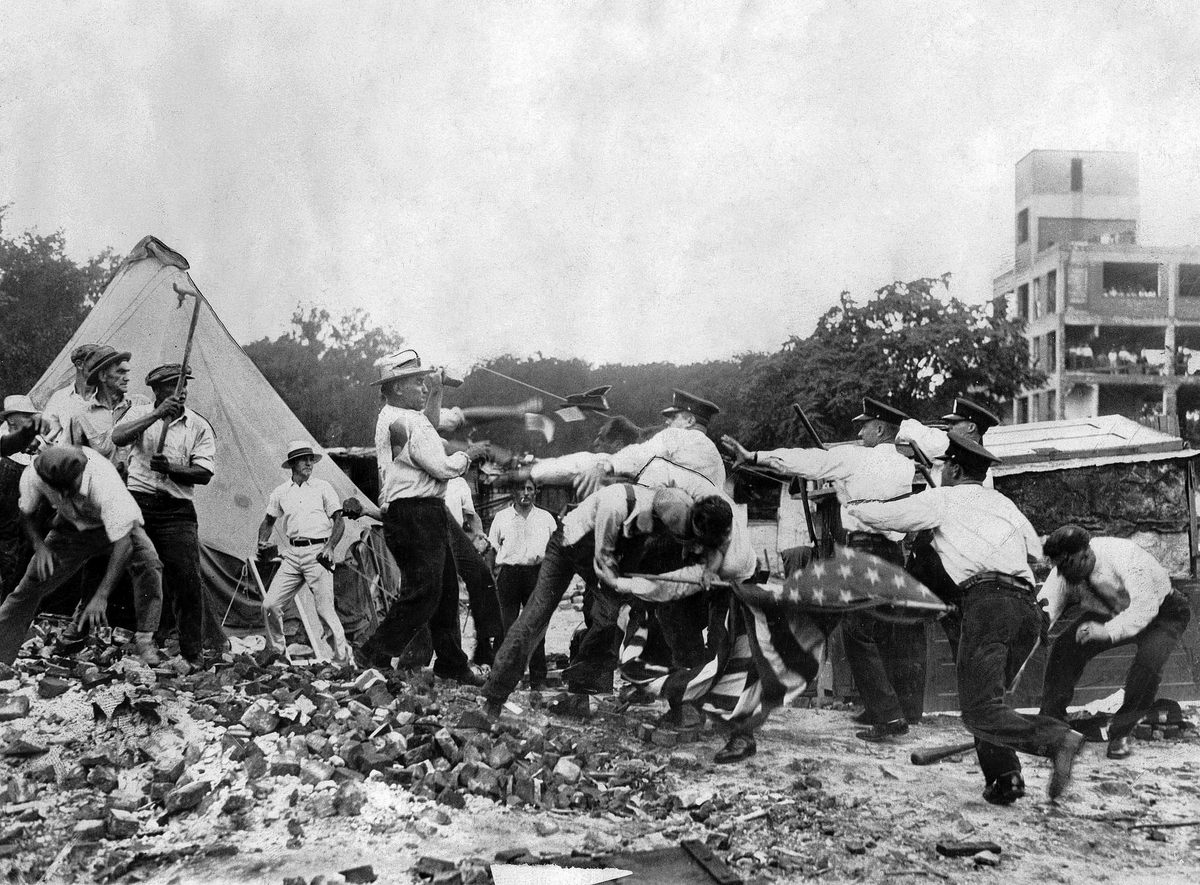
This was one of the most infamous, yet least remembered times the U.S. turned its guns on its own people. World War I veterans and their families faced tanks (yes, actual tanks, M1917s with Patton in the lead), cavalry, and tear gas in the nation’s capital. That’s not patriotism, it was betrayal. And today, as we watch the US government again deploy troops against civilians, we should remember exactly what happened in ’32, when leaders claimed this kind of violence was necessary.
The Spark
The idea of a bonus march had started years earlier, when veterans first pressed Congress for early payment. In 1932, with unemployment at record highs and families going hungry, local marches spread across the country. From Portland to Pittsburgh, veterans packed what little they had and boarded trains, hitchhiked, or walked to Washington. They called themselves the Bonus Expeditionary Force, echoing the American Expeditionary Force they’d fought in during the war. These weren’t agitators, they were desperate men answering the same call they once had, only this time to fight for survival.
By the summer of 1932, the Great Depression had driven millions into poverty. Among them were World War I veterans who had been promised bonus payments for their service, but not until 1945. Hungry and desperate, they marched on Washington demanding their money now. They set up camp on Anacostia Flats, a shantytown of tents and scrap wood shelters. At their peak, the “Bonus Army” swelled to more than 40,000 veterans and family members.
Life in the Camp
For weeks, the camp stood as a kind of city within the city. Families lived in tents and lean-tos, veterans dug ditches and built sanitation systems, and communal kitchens fed thousands every day. Despite the hardship, there was discipline and order. Walter Waters, a former sergeant and one of the leaders, later wrote: "We were ragged, we were hungry, but we were not disorganized."
Marchers told reporters they were not seeking charity so much as payment of a promise: "All we ask is our rights as soldiers who fought for this country. We don’t want charity. We want our bonus."
Major General Smedley Butler came to the flats and backed the veterans publicly: "I never saw such fine Americanism as is exhibited by you people. You are the best-behaved group of men in the country today."
The Crackdown
President Hoover panicked. Instead of negotiating, he called in the Army. He put General Douglas MacArthur in charge, with George Patton and Dwight Eisenhower as his deputies. About 600 infantry, 200 cavalry, a machine gun squadron, and Patton’s tanks were unleashed on unarmed veterans and their families. Hoover claimed he only ordered the camps cleared, but MacArthur went further, burning the encampments and driving people out at bayonet point. Tear gas choked families, cavalry charged through crowds, and troops set fire to the shelters.
Two veterans were killed during the assault, more than 100 injured, and at least one infant later died from the effects of gas. Dozens were arrested, and thousands were left homeless again, their meager belongings destroyed in the flames. Newsreels showed troops driving veterans out with gas and fire, but the Hoover administration pushed hard to bury the outrage under Red Scare headlines. Some Americans saw the truth. Many were told a lie.
The Cover Story
To excuse the violence, Hoover and his allies blamed fictional “outside agitators” and communists, insisting the veterans had been duped by radicals. It was a cynical lie, meant to fool the country into believing the government cared for veterans while smearing them as dangerous traitors. The press largely carried that line, downplaying the brutality in favor of red-baiting. If that sounds familiar, it’s because the “outside agitators” myth is still used to discredit protests and excuse violence today.
The Law Bent
The Posse Comitatus Act of 1878 was supposed to keep the U.S. military out of domestic law enforcement. Hoover’s lawyers claimed the act didn’t apply because Anacostia Flats was federal land. It was a flimsy excuse. Soldiers with tanks and tear gas weren’t “protecting property.” They were violently evicting veterans and their families. In spirit, it was a violation of the act. In practice, the law bent to power, as it so often does. And they got away with it. No consequences of any kind – for anyone.
The Story We Carry
The Bonus Army was crushed. Veterans scattered, some with lifelong scars. Hoover’s reputation never recovered, and Franklin Roosevelt won the White House that fall. But even FDR never granted the bonuses until Congress forced his hand years later. The lesson was clear: when the American people demand fair treatment, the government too often turns its guns inward. And when it does, it hides behind lies about radicals, agitators, and order, anything to excuse the betrayal of its own people.
Sources
- Dickson, Paul & Allen, Thomas B. The Bonus Army: An American Epic. Walker & Co., 2004.
- Daniels, Roger. The Bonus March: An Episode of the Great Depression. Greenwood Press, 1971.
- McCoy, Donald R. The Presidency of Herbert Hoover. University Press of Kansas, 1973.
- Butler, Smedley. Speech to Bonus Army, July 1932 (archival transcript).
- U.S. National Archives, “Bonus Army March, 1932,” Photographs and Records.