The Compton's Cafeteria Riot, 1966
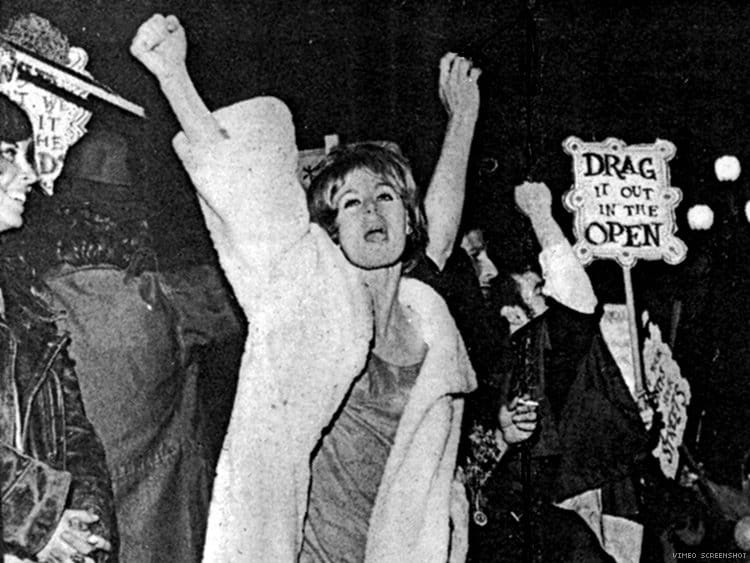
Three years before Stonewall made headlines, trans women and drag queens in San Francisco's Tenderloin said enough. Not with petitions or polite requests. With a cup of scalding coffee thrown straight into a cop's face, with smashed windows, with fire.
The exact date is lost to history. San Francisco's police records conveniently vanished, and no media outlet bothered to cover it. But sometime in August 1966, at Gene Compton's Cafeteria on the corner of Turk and Taylor, trans women and drag queens decided they'd had enough of the city's bullshit. What followed wasn't polite protest. It was rage that had been building for decades, finally erupting in broken windows and burning newsstands.
When Existing Was a Crime
In 1966, San Francisco still enforced an 1863 law that made it illegal to wear "dress not belonging to his or her sex." That was the cross-dressing statute. Police also used "female impersonation" charges, often targeting anyone they suspected of sex work. Trans women could be arrested just for existing in public. The punishment? Being thrown into men's jails, where the violence was predictable and brutal.
The Tenderloin was one of the only neighborhoods where trans women and drag queens could exist semi-openly, though "openly" is generous. Cops harassed them constantly, arrested them for made-up crimes like "obstructing the sidewalk," and subjected them to routine violence. If your lipstick was too bright, if your hair was too long, if a cop decided you looked wrong, you went to jail.
Gene Compton's Cafeteria, a 24-hour chain diner, became a refuge. Open all night, close to the bars and bathhouses and hair salons, it was where trans women gathered after work, after performances, after turning tricks. They'd nurse 60-cent cups of coffee for hours, talking, surviving, being visible in one of the few places that would let them.
Then management decided even that was too much. They hired guards. They added arbitrary "service charges" to bills when trans customers sat down. They called the cops to clear the place out. On July 18, 1966, members of Vanguard picketed outside Compton's.
Vanguard had formed in fall 1965, founded by Adrian Ravarour (a former priest) and Billy Garrison with support from Glide Memorial Church and ministers like Reverend Cecil Williams and Reverend Ed Hansen. It was made up largely of street hustlers, homeless queer youth, drag queens, and gender non-conforming people - a coalition of everyone the city wanted to disappear. The picket failed to change management's policy, but it showed what organized resistance looked like. A few weeks later, the eruption at Compton's proved they'd learned the lesson.
The Night It Exploded
It was after the bars closed, sometime in August. The cops showed up at Compton's again, doing what they always did: grabbing trans women, threatening arrests, asserting power. One officer put his hands on a drag queen. She threw her coffee in his face.
The cafeteria erupted. Tables flipped. Plates and sugar shakers flew through the air, crashing through the big plate-glass windows. Drag queens swung their heavy purses at cops. The fight spilled into the street. A police car got trashed. A newsstand was set on fire. Dozens of people were hauled off in paddy wagons, but not before they made it clear: fuck you, no more.
Amanda St. Jaymes, a trans woman who ran a residential hotel nearby and was there that night, described the years of harassment that led to the explosion: "We got tired of being harassed. We got tired of being made to go into the men's room when we were dressed like women. We wanted our rights."
The next night, when Compton's reopened with new windows, trans women picketed. When other restaurants in the area banned them in retaliation, they picketed those too. Compton's windows got smashed again.
A Victory Nobody Remembers
The riot didn't make the news. Arrest records were destroyed - likely deliberately. For decades, the story existed only in the memories of the people who'd been there.
But things did begin to change, slowly. The city opened the Center for Special Problems, one of the nation's first social services programs for trans people. The National Transsexual Counseling Unit was created to help trans people get ID cards that matched their gender presentation. San Francisco Police Sergeant Elliott Blackstone, who'd been working as a liaison to the LGBTQ community since 1962, helped push through some departmental policy changes.
Let's be clear though: the violence didn't stop. Trans women in the Tenderloin continued to face brutal harassment through the 1970s. In May 1974 - eight years after Compton's - police still arrested 10 people in the Tenderloin for wearing women's clothing. The cross-dressing law wasn't repealed until July 1974. Many of the women who fought at Compton's didn't live to see even that small victory.
Trans people in the Tenderloin had shown they wouldn't be erased quietly. They'd fought back, and the city had to acknowledge them as something other than a problem to be arrested away.
The women who threw those dishes didn't get parades. Many died young (violence, AIDS, the exhaustion of fighting just to exist). Amanda St. Jaymes's date of death is unknown. Tamara Ching lived to tell her story to historian Susan Stryker decades later. Felicia Elizondo, Collette LeGrande, and Donna Personna survived to bear witness decades later. Others whose names we know include Alexis Miranda, who became an influential transgender activist afterward.
But most of the people who fought that night remain nameless. We don't know who they were. The state made sure of that when it destroyed the arrest records.
In 1991, trans historian Susan Stryker stumbled across a single line in an archive: "Drag queens protest police harassment at Compton's Cafeteria." She spent years tracking down survivors, piecing together what happened from oral histories and scraps of evidence. In 2005, she released the documentary Screaming Queens, finally bringing the riot to wider attention.
Today, the blocks around Turk and Taylor are designated as Compton's Transgender Cultural District, the first legally recognized trans district in the world. A plaque marks the spot. In January 2025, the building was placed on the National Register of Historic Places, the first such listing associated with the fight for transgender civil rights.
The Pattern We Keep Ignoring
This wasn't even the first time. Seven years earlier, in 1959, the Cooper Do-nuts Riot in Los Angeles saw drag queens and trans women fight back against police harassment by hurling doughnuts and coffee. That got forgotten too (I'm writing an entry on it now for next month). The pattern is clear: when queer people and trans people fight back, the historical record has a way of vanishing.
The Compton's riot happened in the context of a nation that had spent a century criminalizing trans and gender non-conforming existence. It happened because enforcement was the system, not an aberration. It happened because, as with every marginalized group in American history, trans people and street queens were told to wait their turn, be patient, ask nicely.
They threw coffee instead. They broke windows. They set fires. And for a brief moment, the people in power had to pay attention.
The erasure wasn't just neglect. It was structural and intentional. San Francisco police destroyed arrest records. No newspapers covered it. The city archivist told historian Susan Stryker in the 1990s that the records had been "disappeared." When marginalized people resist, the state makes sure there's no paper trail.
Three years later, Stonewall would get all the credit for starting the gay rights movement. Compton's faded into historical footnotes. Which is what always happens when the people who do the dangerous work don't fit the narrative of respectable resistance - and when the state actively destroys the evidence of what they did.
The lawmakers writing bathroom bills and drag bans today think they're new. They're not. This happened before. Trans people fought back then. They'll fight back now. And they won't be alone.
Sources
- Susan Stryker and Victor Silverman, Screaming Queens: The Riot at Compton's Cafeteria (documentary), 2005
- "Ladies in the Streets: Before Stonewall, Transgender Uprising Changed Lives," NPR, May 5, 2015
- Clare Sears, Arresting Dress: Cross-Dressing, Law, and Fascination in Nineteenth-Century San Francisco (Duke University Press, 2014)
- GLBT Historical Society archives, San Francisco
- "Compton's Cafeteria Riot," Los Angeles Public Library blog
- National Register of Historic Places listing, 101 Taylor Street, San Francisco, January 2025
- Jules Gill-Peterson, "The Transgender Experience in California," Alta Journal, March 2023
- Adrian Ravarour papers and Vanguard organization materials, San Francisco Public Library LGBTQIA Center