The Flint Sit-Down Strike (1936–1937)
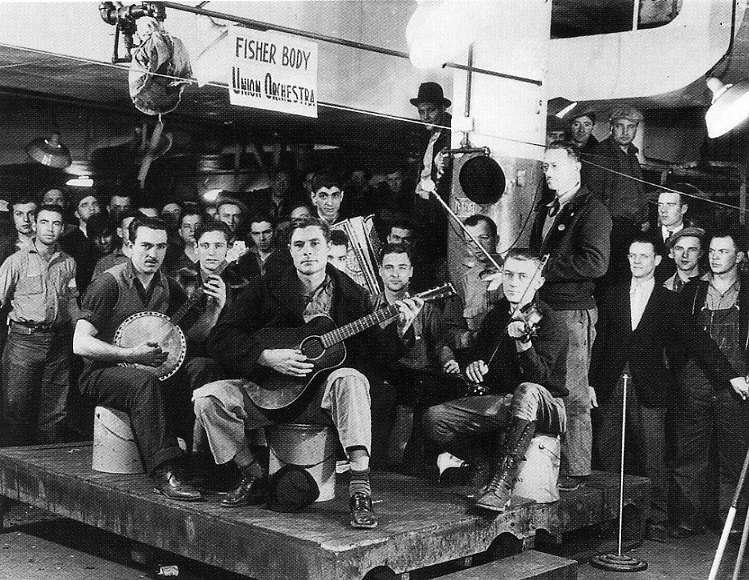
When General Motors told workers to get back on the line in Flint, Michigan, the response was simple: fuck you, make me.
The Spark
Tired of speedups, firings, and starvation wages, auto workers stopped walking out the factory door when the whistle blew. They stayed inside instead, shutting down production where it hurt the bosses most. It wasn’t just a strike, it was a takeover. Workers seized the lines, the equipment, and the buildings, seventeen in all. They ran the plants themselves, locking out the managers and security guards.
The Battle Inside
Conditions inside were rough. Men slept on car seats, cooked meals on makeshift stoves, and kept guard shifts around the clock. Families and supporters formed the “Women’s Emergency Brigade,” led by Genora Johnson Dollinger. They smuggled food, medical supplies, and even baseball bats past police lines. When cops tried to cut off heat and food, women linked arms outside the gates, daring the clubs and tear gas to come down on them.
Running Bulls
The strike’s turning point came in what workers called the “Battle of Running Bulls.” Police stormed the Fisher Body Plant with tear gas and guns, trying to break the occupation by force. The workers fought back with fire hoses, door hinges, and whatever they could throw. Tear gas drifted through the windows, but strikers smashed them open, grabbed the canisters, and hurled them right back. Outside, the Women’s Brigade swung clubs at police cars. When the smoke cleared, the cops were the ones retreating. The workers had held.
Roosevelt Blinks
Unlike the 1934 textile strikes led largely by women, where Roosevelt looked away, this time FDR blinked. He didn’t send in the National Guard to break the strike. He sent them to keep the peace. With production halted and GM losing millions, the company had no choice but to sit down at the bargaining table. In February 1937, the strike ended with victory. The United Auto Workers had won recognition.
What They Won
The sit-down strike at Flint didn’t just win union recognition. It cracked open one of the most powerful corporations in the world. Union membership across the country exploded, doubling in a single year. The tactic spread, and workers in rubber, steel, and beyond used it to force recognition. For once, the bosses weren’t the only ones calling the shots.
The People
Genora Johnson Dollinger and her Emergency Brigade showed that women weren’t just on the sidelines, they were on the front lines. The workers inside, many of them immigrants and second-generation Americans, proved that ordinary people could hold the line against armed police and corporate power. The union they built, the UAW, started as a craft union but used this victory to broaden its scope, eventually shaping wages, hours, and conditions for millions far beyond auto plants.
The Story We Carry
The Flint sit-down strike wasn’t polite negotiation. It was workers refusing to be treated like disposable parts. They shut down factories, stared down cops, and forced one of the largest corporations in the world to recognize their humanity. That moment reset the balance of power in American industry, if only for a while.
Sources
- Sidney Fine, Sit-Down: The General Motors Strike of 1936–1937 (University of Michigan Press, 1969)
- Jeremy Brecher, Strike! (South End Press, 1972)
- Philip Dray, There Is Power in a Union: The Epic Story of Labor in America (Anchor, 2010)
- Contemporary reporting from The Flint Journal, January–February 1937