The Thibodaux Massacre: November 23, 1887
A Week Into Riot-a-Day
It’s been a week into Riot-a-Day. Seven days, seven stories of blood and resistance. Today’s story: Thibodaux, Louisiana. One of the darkest chapters in American labor history.
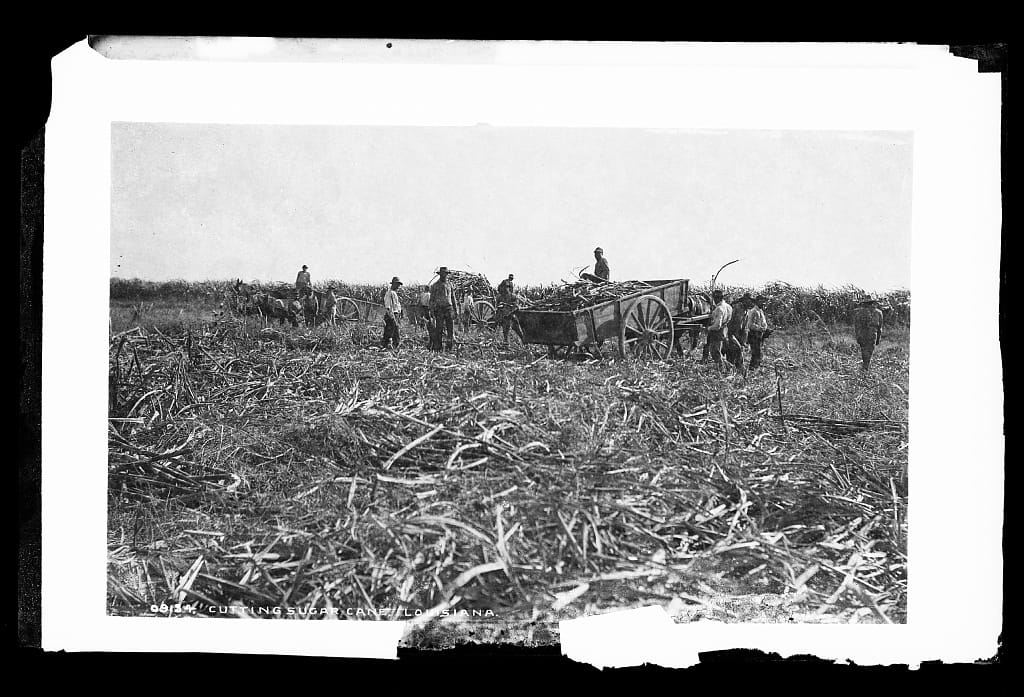
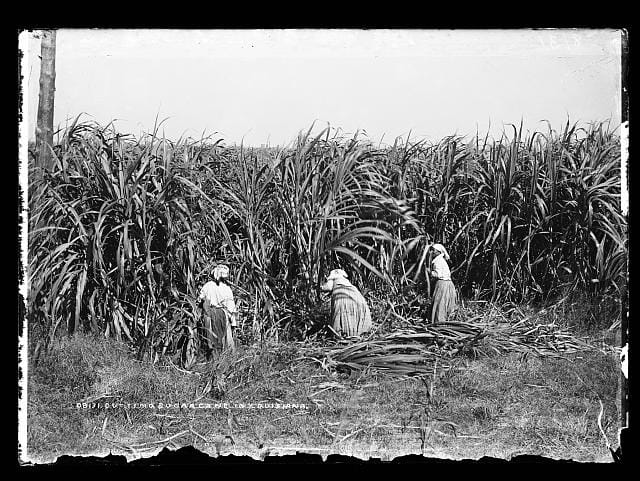
Life in the Cane Fields
In 1887, Louisiana’s sugar parishes were ruled like fiefdoms. Cane work was brutal, dawn to dusk in sweltering heat. Most workers were Black, many formerly enslaved. Families crowded into one-room shacks owned by the company, with no sanitation and little comfort. Children worked beside their parents in the cane fields. During harvest, the day stretched from dawn until dark, twelve to fourteen hours swinging machetes through cane stalks in choking heat and smoke. Injuries were constant, from machete cuts to heatstroke, and there was no medical care.
Pay was meager, as low as forty to sixty cents a day. Worse, it often came not in cash but in scrip, a kind of plantation money good only at the company store. The stores charged double or triple normal prices, ensuring workers stayed in debt. Leaving the plantation was no escape, as sheriffs and planters used vagrancy laws to drag workers back. Freedom? Don’t kid yourself. This was slavery with a new label slapped on.
Starting in 1880, there were strikes every year against the Louisiana Sugar Planters Association, each one met with resistance. In this world, a raise to $1.25 in cash wages meant survival. It meant food for families, clothes for children, and the chance to breathe free of the store’s grip. When the Knights of Labor organized sugar workers that fall, the planters panicked.
The story of Thibodaux was local, but it was also part of a national pattern of repression.
Nationally, 1887 was a grim year for workers. The Knights of Labor were reeling after Haymarket, branded as radicals and anarchists. Industrial barons were stronger than ever, determined to crush strikes. In the South, white supremacy was being written into law, ensuring Black workers had no shield. And in Washington, President Cleveland and Congress looked away. The sugar strike in Louisiana didn’t happen in isolation. It happened in a country where capital and the state were closing ranks against labor.
The Strike
In late October, ten thousand workers struck across four parishes. They demanded cash pay and a raise to $1.25 a day. Among them was Junius Bailey, a Black teacher and Knights of Labor leader, who carried those demands directly to the planters before the shooting began. Planters wrote openly of their resentment. Alexander Pugh, a leading cane planter, complained in his diary that it was 'very distasteful' to pay Black workers monthly wages, but he could do no better because everyone else had agreed to it. Even the smallest concession to free labor was unbearable. The planters refused. Governor McEnery, himself a planter, made his loyalties plain. “God Almighty himself has drawn the color line,” he declared, before calling up the state militia and setting them on the strikers. Tensions rose as the strike dragged on.
The Knights of Labor called the strike, but their record was mixed. They admitted women and Black workers in some places, yet also backed the Chinese Exclusion Act of 1882, arguing it was about protecting American workers from cheaper labor. In Louisiana they relied on Black cane workers for strength, but nationally their commitment to equality was inconsistent at best. The strike’s backbone was Black cane workers themselves. They organized meetings, walked off the fields, and brought their families into the struggle. Their names are mostly missing from the record, erased by hostile newspapers that preferred to talk of “the negroes” or “the mob.” That silence wasn’t an accident. The bosses and their pet newspapers wanted Black workers nameless, faceless, disposable. The Black press did not stay silent. The New Orleans Crusader called the strike a fight for freedom and dignity, and warned that the planters would meet it with blood. By contrast, the villains were well documented: Governor Samuel McEnery sent the militia, and planters like Armand Thibodaux vowed to restore “discipline” with gunfire. In Thibodaux, workers and their families gathered, holding firm despite threats.
The Massacre
In the days before the killing, Thibodaux was already locked down under armed patrols. Tensions boiled over on November 22 when two white patrolmen were wounded. White papers framed it as proof of Black aggression, but Black journalists and eyewitnesses later suggested the shootings may have been staged to create a pretext for bloodshed. Whatever the spark, by the next morning the cry had gone up: the Black community would be punished. And punished they were. On November 23, 1887, the killers came in force. Governor McEnery had sent the Louisiana state militia, drawn from the same class that once enforced slavery. Planters armed and organized local vigilantes, deputized by sheriffs. Together, these forces swept through the Black neighborhoods of Thibodaux. They fired into houses, killing men at their doors and women in their kitchens. Children were caught in the fire. Some men were dragged into the streets and executed. Bodies were left in the dirt as a warning. The conservative death toll was 30, but witnesses spoke of hundreds. It was a goddamn atrocity. Let’s stop dressing it up as anything less. White papers claimed only a handful of dead. Black witnesses spoke of dozens, even hundreds. Some bodies were dumped in shallow graves outside town. No whites were killed.
Picture it in your own town today: armed mobs gunning down families in their homes, hunting neighbors through the streets, leaving corpses as a warning. That is what happened in Thibodaux in 1887.
One newspaper described “Negroes shot down like rabbits.” Another called it “a great victory for property and civilization.” For the planters, it was mission accomplished. For the workers, it was terror.
Jack Conrad, a Black veteran and laborer, left an affidavit describing the terror. He was at home when the attackers burst in, his son was killed, and his house turned into a battleground. Survivors told of hiding in the swamps, chased by dogs, listening as gunshots cracked through the cane fields. One worker said, “They meant to kill us all so we could never rise again.” Black newspapers like the New Orleans Crusader called it murder in defense of slavery’s old order. For the families in Thibodaux, it was not law and order. It was terror. Deliberate terror.
Outside Louisiana, the national press mostly looked away. The New York Times buried the killings in brief mentions. The Chicago Tribune called it proof that the sugar planters had defended civilization. Silence and approval told the story as clearly as the gunfire.
The Aftermath
The strike was crushed. Survivors were forced back to the fields under even harsher terms. For years after, armed patrols kept Black labor in line. The Knights of Labor never again had power in the sugar fields, and the massacre deepened their decline nationally. Already weakened after Haymarket, Thibodaux showed their limits and hastened their fall. The Black press called it a butchery in the interest of slavery’s old order. Survivors later told of hiding in the swamps, hunted like rabbits, their families torn apart. Historians later underscored what survivors already knew: that Thibodaux revealed the limits of emancipation, as freedom collapsed into peonage and terror. Historian Rebecca Scott wrote that Thibodaux revealed the limits of emancipation, as freedom collapsed into peonage and terror. John Rodrigue has called it the most violent labor dispute in American history, its message unmistakable: cross the bosses and they’ll put a bullet in your back. That’s not law. That’s terror. Thibodaux sent a message that echoed across the South. Any attempt by Black workers to organize would be met with blood. Planter widow Mary Pugh said afterward, “I think this will settle the question of who is to rule, the white man or the negro, for the next fifty years.” The true number of dead was never officially recorded, itself part of the erasure.
The Echo
A week into this project, a grim pattern is already clear. When workers, especially Black workers, demanded dignity, the bosses and their allies answered with bullets. Thibodaux was not a riot. It was a massacre. And it was Black workers and their families who paid the highest price, their voices too often erased from the national record, even as Black oral histories and testimony carried the truth forward. Mainstream papers buried or excused the killings, but the New Orleans Crusader and the survivors themselves preserved what really happened. Historian John Rodrigue has noted that for generations Thibodaux was deliberately erased from Louisiana’s public memory, a silence that spoke as loudly as the gunfire itself. As the Crusader wrote at the time, it was nothing less than “the butchery of our people in the interest of slavery’s old order.”
This massacre also became a blueprint, showing white elites just how much they could get away with. Historian John Rodrigue has argued that Thibodaux set the pattern for violent racial labor suppression in the South, proving that mass killing could be carried out with impunity. Rebecca Scott noted that it revealed the limits of emancipation itself, as freedom gave way to peonage enforced by terror. Once they got away with Thibodaux, the playbook was set. And the bastards kept running it. In 1919 at Elaine, Arkansas, hundreds of Black sharecroppers were slaughtered for daring to organize. In 1921, Tulsa’s Black community was burned to the ground. The same script appeared again and again: Black labor, Black progress, met with white terror. And today, when protests rise, power still reaches for the same language, branding dissent as chaos and justifying violence in the name of order.
Buried, But Not Gone
For decades Thibodaux was buried in silence, scarcely spoken of even in Louisiana. It was nearly erased. Only in recent years did descendants like Wiletta Ferdinand bring it back into public memory, through exhibits, scholarship, and calls for a memorial. The silence of history was broken by those who refused to forget.
#RiotADay #LaborHistory #USHistory #History 🗃️
Sources
- John C. Rodrigue, Reconstruction in the Cane Fields: From Slavery to Free Labor in Louisiana’s Sugar Parishes, 1862–1900 (LSU Press, 2001)
- Rebecca J. Scott, Degrees of Freedom: Louisiana and Cuba after Slavery (Harvard, 2005)
- Leonard Richards, Gentlemen of Property and Standing: Anti-Abolition Mobs in Jacksonian America (Oxford, 1970)
- PBS American Experience, “The American Experience: Thibodaux Massacre”
- Smithsonian Magazine, “The Thibodaux Massacre Left 60 African Americans Dead and Spelled the End of Unionized Farm Labor in the South for Decades” (2017)
- Zinn Education Project, “Thibodaux Massacre” (2017)
- Oxford American, “Persons Unknown” (2019)
- Contemporary accounts in the New Orleans Times-Democrat, November 1887
- Alexander Pugh diary entries (quoted in Rodrigue, Reconstruction in the Cane Fields)
- Governor Samuel D. McEnery quote: “God Almighty himself has drawn the color line” (contemporary press reports)
- Jack Conrad affidavit (federal archives, cited in Zinn Education Project and Smithsonian reporting)
- New Orleans Crusader, 1887 coverage
- Mary Pugh quote (widow of planter, cited in Smithsonian Magazine and Rodrigue)
- Louisiana Sugar Planters’ Association records and proceedings (noted in Rodrigue and DeSantis)
- Accounts of unmarked mass graves and burial sites (cited in John DeSantis, Prologue, Summer 2017, National Archives)
- John DeSantis, The Thibodaux Massacre: Racial Violence and the 1887 Sugar Cane Labor Strike (History Press, 2016)