The Zoot Suit Riots: 1943
Not Just a One-Hit Wonder
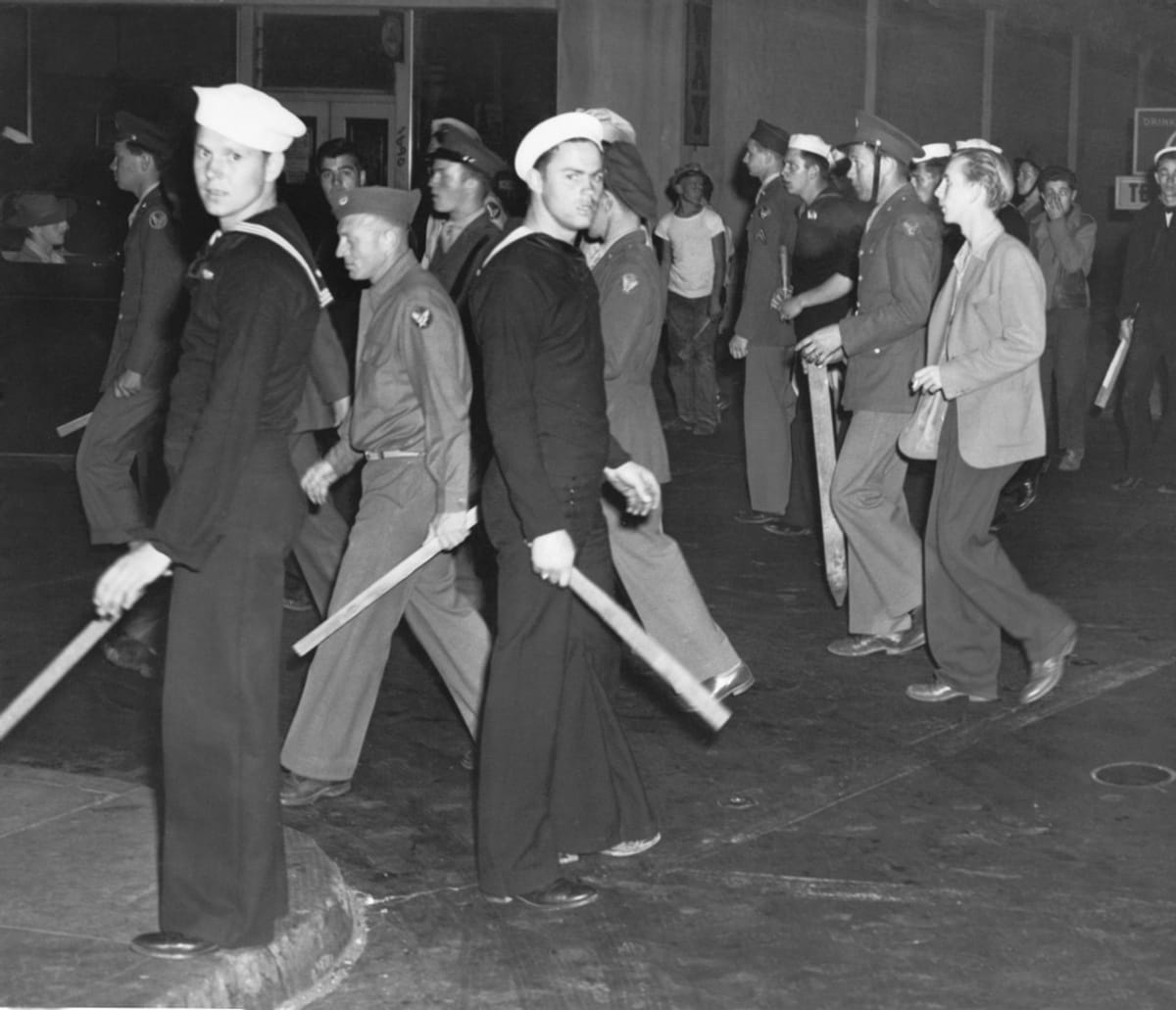
The Zoot Suit Riots aren’t just that mildly annoying ear-worm from 1997, or a punchline about baggy pants. They were one of the darker chapters in Los Angeles history. In June 1943, mobs of white servicemen, cheered on by the press and shielded by police, stormed through the city to beat and strip young Mexican Americans in the streets. The fashion wasn’t the crime. Being brown was.
The Setup
World War II Los Angeles was a city under strain. Mexican Americans had come north in huge numbers to work in defense plants and fields. At the same time, tens of thousands of sailors and soldiers crowded into local bases. Young Mexican Americans claimed their own style in zoot suits: long coats, baggy pants, wide-brim hats. It was pride and defiance stitched into fabric.
The press turned that pride into a target. The Los Angeles Times smeared Mexican American youth as “hoodlums.” The Los Angeles Daily News warned of a “Mexican crime wave.” Officials and commentators went further, calling zoot suiters unpatriotic and un-American at a time of wartime sacrifice. The message was clear: brown kids in baggy suits weren’t just dangerous, they were enemies within.
Sleepy Lagoon
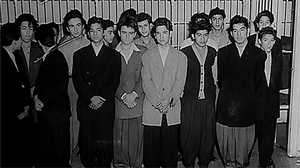
The panic didn’t start with the riots. In August 1942, the body of José Díaz was found near a reservoir called Sleepy Lagoon. Police rounded up more than 300 young Mexican Americans in dragnet raids. Twenty-two, including Henry Leyvas, were put on trial. The proceedings were a racist farce: the defendants were denied clean clothes and haircuts, the judge let prosecutors argue that Mexicans were biologically prone to crime, and the press called them “wolf packs.” Seventeen were convicted on flimsy evidence, including Henry Leyvas, who became a symbol of the injustice. His name would echo through community meetings and protests long after the trial. The convictions were overturned in 1944, but the damage was done. Los Angeles had been taught to see Mexican American youth as criminals before they even walked into a courtroom.
June 1943
On June 3, about 50 sailors attacked a group of Mexican American kids in East LA. The next night, hundreds more servicemen piled into taxis and stormed downtown, looking for anyone in a zoot suit. They beat men bloody, tore off their clothes, and burned the suits in the street. For five nights, mobs of servicemen swelled into the thousands. Black and Filipino youth were attacked too. Women were harassed. The police stood by or arrested the victims. A U.S. Navy report later admitted the obvious: “The local press publicized the so-called ‘zoot suit crime wave’ and gave the impression that all Mexican Americans were criminal and subversive.”
At least 150 people were reported beaten. Dozens ended up in hospitals. Not a single sailor was charged.
Chavez Ravine and the Long Shadow
During the war, the Navy built a massive supply and training base right next to the Mexican American neighborhoods of Chavez Ravine. Thousands of sailors drilled, lived, and caroused beside families the press had already branded as dangerous. That closeness fed the tension: young servicemen primed by racist headlines spilled into nearby barrios looking for fights, and the panic ignited.
The riots weren’t the last time Los Angeles turned on its Mexican American residents. Less than two decades later, whole neighborhoods in Chavez Ravine were bulldozed to make way for Dodger Stadium. Families who had already seen their sons beaten and stripped in 1943 were forced from their homes in the name of “progress.” In Los Angeles, Mexican Americans could be workers, soldiers, or scapegoats, but rarely equals.
Aftermath
The riots ended only when Navy and Army commanders finally barred servicemen from going into the city. By then, the message was delivered. The press congratulated the mobs for “cleaning up” Los Angeles. The Times crowed that sailors had “taught the young hoodlums a lesson.” That wasn’t journalism. It was applause for racist violence.
Banning the Suit
City officials and the War Production Board moved quickly to ban the zoot suit itself. They claimed it wasted precious wartime fabric. Tailors were ordered not to make them, shops pressured to stop selling them, and police arrested young Mexican Americans simply for wearing them. The message was clear: it wasn’t the mobs or the press at fault. It was the clothes, the culture, and anyone who wore them was branded unpatriotic and un-American. Instead of justice, the response criminalized a style and doubled down on blaming the victims.
The Moral Panic
The Zoot Suit Riots were the product of a moral panic. Politicians, judges, and journalists painted Mexican American youth as a threat to public order. Fashion became evidence. A wide-brim hat was treated like a gang insignia. A baggy pair of pants like a weapon. Moral panics thrive because they make complex problems simple. Crime, overcrowding, wartime tension - all dumped on brown kids in zoot suits. With the press fanning the flames, mobs believed they were righteous while they beat teenagers in the street. It was never about safety. It was about control.
The Real Story
The Zoot Suit Riots weren’t riots at all. They were racial terror, with the cops and press siding openly with the attackers. They showed that even as America fought fascism abroad, it tolerated fascism at home. They revealed how style and pride could be criminalized when worn on brown bodies. And they left scars Mexican American communities carried for generations.
Not just music, not just fashion. The Zoot Suit Riots were a warning about how panic turns neighbors into enemies. The mobs thought they were saving the city. In truth, they were the violence they claimed to be fighting. Decades later, Los Angeles apologized. Too late for the kids stripped in the streets, but a reminder that the story still matters.
Sources
- Eduardo Obregón Pagán, Murder at the Sleepy Lagoon: Zoot Suits, Race, and Riot in Wartime L.A. University of North Carolina Press, 2003.
- Mauricio Mazón, The Zoot-Suit Riots: The Psychology of Symbolic Annihilation. University of Texas Press, 1984.
- “Troops Hunt Zoot-Suiters in Los Angeles,” Los Angeles Times, June 7, 1943.
- U.S. Navy, Report on the Zoot Suit Disturbances in Los Angeles, 1943.
- William Estrada, The Los Angeles Plaza: Sacred and Contested Space. University of Texas Press, 2008. (Chavez Ravine context).
- George Sánchez, Becoming Mexican American: Ethnicity, Culture, and Identity in Chicano Los Angeles, 1900–1945. Oxford University Press, 1993.
- Don Normark, Chavez Ravine, 1949: A Los Angeles Story. Chronicle Books, 2004.
- Mike Davis, City of Quartz: Excavating the Future in Los Angeles. Verso, 1990.